- Pillar 1: The Outreach Framework and Partner Selection
- Pillar 2: Identifying High-Converting Partner Categories
- Pillar 3: Activating Partners and Reducing Friction
- Pillar 4: Co-Hosting Events and Monthly Workshops
- Pillar 5: Nurturing a Partner Ecosystem and Cross-Promotions
- Pillar 6: Structuring Incentives Without Sacrificing Margins
- Integrating Relationships into Your Growth Strategy
In recent years, the aesthetics industry has witnessed a dramatic shift toward automated digital marketing. Med spa owners across the country have fallen into the trap of putting their lead generation entirely on autopilot—relying exclusively on paid advertising algorithms, outsourced agencies, and hands-off digital funnels.
While digital marketing remains an important piece of an omnipresent marketing strategy, over-indexing on automation creates a significant vulnerability. Aesthetics is fundamentally a deeply personal, relationship-driven business. Patients do not choose a medical spa simply because they saw an ad; they choose a provider based on trust, reputation, and personal recommendations.
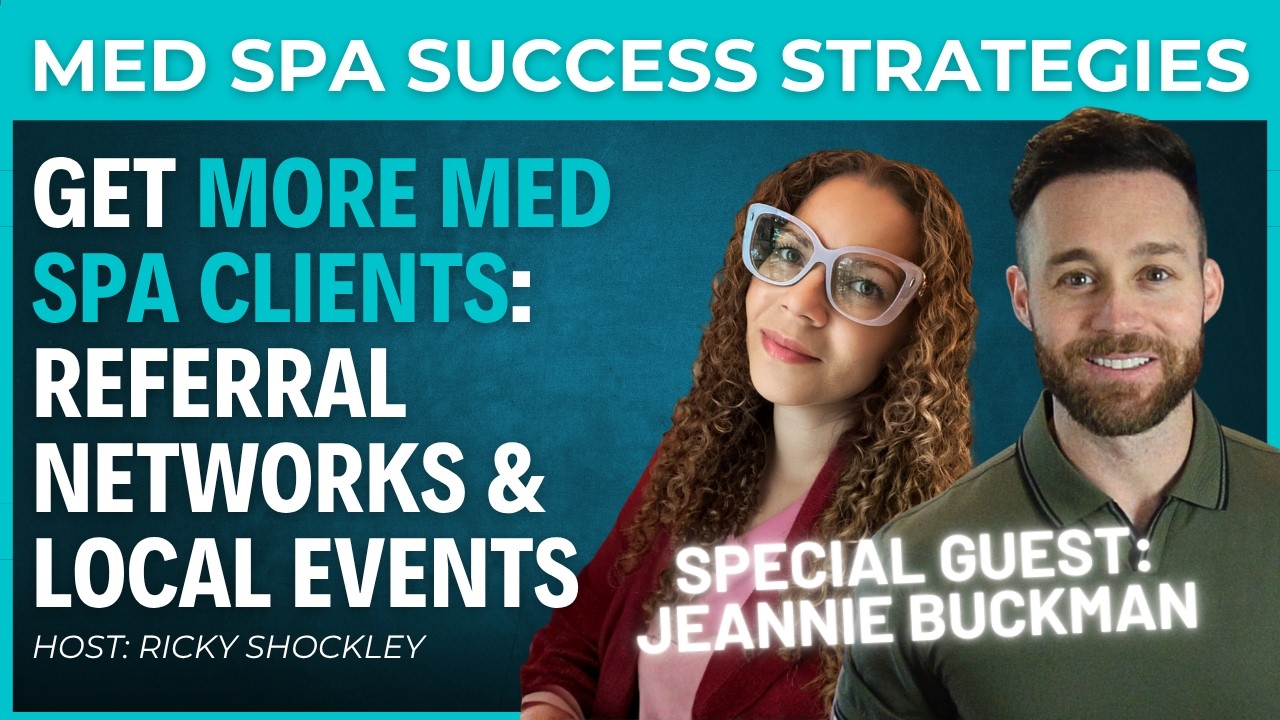
Drawing on insights from Jeannie Buckman, Founder and CEO of AutomateWell, this article explores why practice owners must complement their digital efforts with relationship-based marketing. Developing strategic local referral partnerships allows med spas to create a consistent pipeline of high-value clients, differentiate their brand in competitive markets, and drive predictable revenue without constantly burning capital on ad spend.
Pillar 1: The Outreach Framework and Partner Selection
The foundation of any successful referral strategy begins with targeted outreach. Many practice owners fail with referral marketing because they take a scattershot approach—reaching out to random local businesses without a clear strategy.
To build a referral network that yields high-value patients, practices must apply a disciplined selection criteria. Not all local businesses make good referral partners.
Criteria for the Ideal Referral Partner
- Complimentary Services: Look for businesses that serve your ideal client profile but offer non-competing, complementary services. The goal is to identify businesses where your prospective patients are already spending their time and money.
- Business Longevity: Prioritize established businesses over brand-new startups. Newer businesses are often consumed with building their own initial client base and lack the established roster necessary to generate consistent cross-referrals.
- Staff Size and Volume: A business with a full staff and multiple service providers is a clear indicator of high foot traffic and active operations. More staff members mean more daily interactions with clients where your services can be recommended.
- Local Reputation and Prominence: Evaluate the business’s standing in your local community. Are they featured in local print publications or regional television? Do they publish a regular client newsletter? Are they a well-known neighborhood staple? Partnering with recognized local figures immediately transfers their trust and credibility to your practice.
The “Coffee Date” Approach to Outreach
Once target partners are identified, initial outreach can occur through direct visits, tailored emails, or text messages. However, the initial meeting must be approached with the right mindset. Approach initial partner meetings like a casual “coffee date” or informal introductory chat rather than a high-pressure sales pitch.
What to Avoid (The Transactional Mindset): “Nice to meet you. If you know anyone who needs a med spa, please send them my way.”
What Works (The Relationship-Driven Mindset): “I love what you’re doing for your clients. How can our practice support and help grow your business?”
Leading with curiosity and generosity activates the principle of reciprocity. When you focus first on how you can support their business, potential partners become significantly more receptive to learning about your practice and sending their clientele your way.
Pillar 2: Identifying High-Converting Partner Categories
To build a diverse referral network, look at your primary service offerings and map out local businesses that address connected client needs.
Core Partner Categories
- Boutique Fitness Studios: Pilates studios, Barre classes, and high-end yoga practices attract wellness-conscious, affluent individuals who prioritize self-care and physical maintenance.
- High-End Beauty Salons: Stylists and colorists build deep personal trust with their clients. Hair salons are prime referral sources for aesthetic treatments, particularly hair restoration and facial rejuvenation.
- Chiropractors and Holistic Wellness Centers: Patients seeking wellness care are often open to integrative aesthetic and longevity treatments, such as IV therapy, body contouring, and skin health.
Service-Specific and Outside-the-Box Partnerships
Beyond standard beauty and fitness categories, match specific clinical offerings with specialized local providers:
- For Body Sculpting & Contouring: Partner with OB/GYN Practices and Postpartum Fitness Specialists.
- For Hair Restoration & PRP: Partner with High-End Salons where clients frequently discuss hair thinning.
- For Wellness & Hormone Therapy: Partner with Integrative Medicine practitioners and Physical Therapists.
The key is identifying partners where the client’s pain point naturally surfaces during standard service delivery.
Pillar 3: Activating Partners and Reducing Friction
One of the primary reasons referral arrangements stall is that practice owners expect their partners to do the heavy lifting. If a partnership relies on an outside business owner remembering to talk about your services, it will inevitably fail.
Referring clients is a significant ask. Your partner is putting their own professional reputation on the line when they make a recommendation. To make the process seamless, you must equip your partners with an Activation Toolkit that eliminates friction.
Essential Components of an Activation Toolkit
- Turnkey Promotional Scripts: Provide ready-to-use SMS text messages and email templates that partners can send directly to their client base or include in their digital newsletters.
- Physical Collateral with Digital Tracking: Avoid standard business cards. Supply partners with premium gift cards featuring custom QR codes. The QR code simplifies the redemption process for the client while enabling your practice to track which partner generated the lead.
- Conversational Hand-off Scripts: Partners do not need to be educated on the complex medical nuances of your aesthetic treatments. Simplify their job by providing a straightforward script: “We partner directly with [Practice Name] down the street. They specialize in [Treatment/Result] and take incredible care of our clients. Here is a VIP card for your initial consultation—give them a call when you’re ready.”
Pillar 4: Co-Hosting Events and Monthly Workshops
Relying solely on physical gift cards sitting at a partner’s reception desk often leads to stagnant results. Over time, physical cards blend into the background alongside other local business collateral.
The most powerful mechanism for activating a referral partner is co-hosting a live event or monthly workshop. This creates a powerful “Joint Event Flywheel” that operates in five steps:
- Co-Plan the Event: Work together to design a 60-minute workshop.
- Merge Audiences: Both businesses invite their respective client lists.
- Deliver Value: Host the educational workshop and provide a great experience.
- Convert & Activate: Attendees opt-in or book consultations on-site, and partners leave fully energized with referral materials.
- Sustain Referrals: The shared success deepens the relationship, leading to ongoing, natural referrals.
Why does this work? Working together to plan and execute an event establishes deep professional trust far faster than casual check-ins. It also immediately exposes your medical spa to a vetted, local audience that already trusts your partner.
Pillar 5: Nurturing a Partner Ecosystem and Cross-Promotions
A single referral partner, no matter how productive, should never be your sole source of external client acquisition. Human dynamics, staffing changes, or shifting business priorities can cause an active referral line to stall.
Practice owners must cultivate a robust ecosystem—a continuous network of local relationships across boutique fitness, salons, clinics, and wellness centers that ensures steady referral flow regardless of individual partner fluctuations.
Strategies for Long-Term Relationship Maintenance
- Monthly Touches: Maintain consistent communication with your ecosystem. Send monthly check-in emails, share updates on new treatment offerings, or schedule monthly coffee meetings to discuss local market trends.
- Cross-Promotional Trades (“Partner of the Month”): Feature a referral partner in your client newsletter as your “Partner of the Month,” highlighting their services and providing a special offer to your patient list. In exchange, ask the partner to run a reciprocal feature in their newsletter or send a dedicated text promotion.
- Local Business Roundtables (“Meeting of the Minds”): Organize a monthly or quarterly meetup for non-competing local business owners focused on premium clientele. Hosting these roundtables positions your med spa as a community leader and creates a formal setting for ongoing cross-referrals.
- Navigating Asymmetric Partnerships: In some instances, a partnership may be naturally one-sided. Larger, highly established medical practices or corporate entities may refer dozens of clients to your med spa without expecting reciprocal patient transfers. They simply want a trusted place to send their patients.
Pillar 6: Structuring Incentives Without Sacrificing Margins
When designing incentive structures for referral partners and prospective clients, practice owners must be deliberate. Offering deep discounts or racing to the bottom damages brand perception and erodes profit margins.
- Avoid Mass-Discounting: Do not treat referral incentives like daily deal sites. High-value aesthetic clients respond better to exclusivity and added value than cheap pricing.
- Focus on VIP Experiences: Offer prospective referral clients high-value, low-cost perks, such as complimentary comprehensive consultations, priority booking privileges, or add-on express treatments (e.g., a complimentary LED light therapy session with a facial booking).
- Tiered Dollar-Off Incentives: If offering financial incentives, use fixed dollar-off amounts (e.g., $25 or $50 off an initial treatment) rather than broad percentage discounts. Fixed amounts protect your margins while providing a clear call to action.
- Regulatory and Ethical Compliance: Ensure all referral programs comply with local, state, and medical board regulations regarding referral incentives and fee-splitting rules in medical practices.
Integrating Relationships into Your Growth Strategy
Referral partnerships are not a replacement for traditional marketing, but rather an essential pillar of a balanced, resilient business model. Just as specialized medical professionals rely on established networks—dentists referring to periodontists, or real estate agents partnering with mortgage brokers—medical spas must embed themselves into the fabric of their local business communities.
By moving past sole reliance on digital ad platforms and actively cultivating a local partner ecosystem, your med spa can build a sustainable, high-converting client pipeline grounded in trust, community authority, and long-term profitability.
To learn more about implementing these relationship-based strategies in your practice, connect with Jeannie Buckman and her team at AutomateWell.