- The Unconventional Path to Aesthetic Medicine
- The Genesis of Cult Aesthetics: Solving an Industry Void
- Synchronizing a Multi-Location Launch
- Transitioning from Provider to Business Leader
- Avoiding the “Device Trap”
- Perfecting the Patient Consultation and Treatment Plan
- Team Accountability and KPI Tracking
- Building a “Market of One”: Marketing and Patient Acquisition
The aesthetic medicine landscape is highly competitive, and the leap from a skilled provider to a successful multi-location practice owner is fraught with challenges. It requires transitioning from a purely clinical mindset to mastering the business of aesthetics—from standardizing patient care and tracking critical key performance indicators (KPIs) to avoiding the notorious “device trap.”
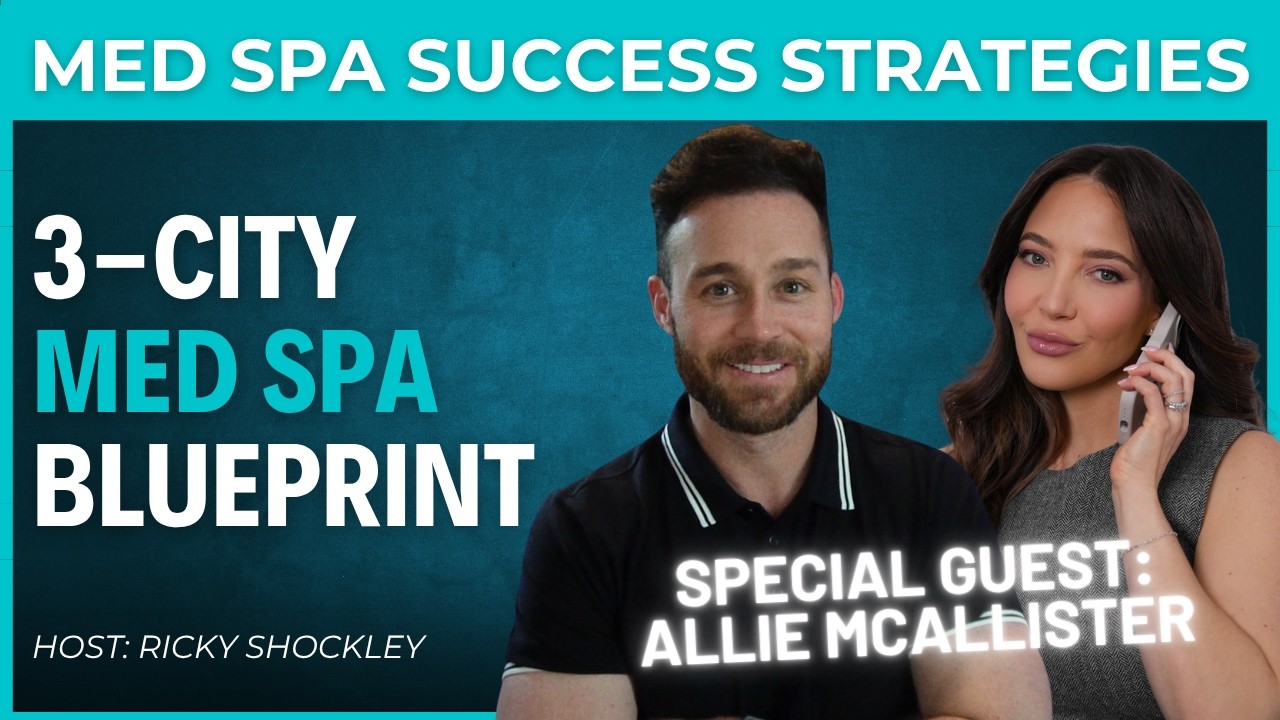
Allie McAllister, a board-certified dermatology nurse practitioner, top 100 injector in America, and National Galderma Trainer, navigated this journey firsthand. As the co-founder of Cult Aesthetics Clinics, the Cult Aesthetics Training Conference, and Squeeze Skincare, she built a multi-location clinical brand spanning Atlanta, Dallas, and Phoenix. Below is a comprehensive look into the raw realities of managing rapid growth, building high-performing teams, and executing modern strategies that drive long-term med spa success.
The Unconventional Path to Aesthetic Medicine
For many providers, the journey into aesthetics is rarely a straight line. McAllister’s career began in the Pediatric Intensive Care Unit (PICU), despite knowing from her earliest days in nursing school that she wanted to pursue aesthetics to help empower women. At the time, the aesthetic specialty was not the highly sought-after path it is today. Instructors actively discouraged it, pushing her toward med-surg or primary care.
Using that doubt as fuel, McAllister worked in the PICU for a year, returned for her Nurse Practitioner degree, and proceeded to knock on every single door in Atlanta until a plastic surgeon hired her part-time. During this period, she worked as a nanny on the side while seeing patients two to three days a week. She took on every task assigned to her—from administering dubious “oxygen facials” to managing dermatology follow-ups, Botox, dermal fillers, and laser treatments.
After honing her skills for two years, she transitioned to a large dermatology practice, intending to master her dermatological foundations. Instead, her plastic surgery patients followed her en masse. Realizing the demand for her aesthetic expertise, she leaned fully into the specialty, building a robust, loyal patient base over the next nine years.
The Genesis of Cult Aesthetics: Solving an Industry Void
The foundation of Cult Aesthetics did not begin with a clinic, but with an educational void. In 2020, while attending a cadaver dissection lab run by Dr. Christopher Surek, McAllister connected with Jen Palot, a nurse practitioner from Texas. Bonding over a shared obsession with elevating their craft, they realized that the industry lacked intimate, highly curated boutique training conferences specifically designed for NPs and PAs. The existing large-scale conferences were typically run by plastic surgeons who historically were not performing the injectable treatments themselves.
Sitting by a pool in Austin after a Sculptra training, they decided to build the conference they personally wanted to attend. Despite friends and family warning them that the name “Cult” was too edgy, they launched the Cult Aesthetics Training Conference. Their first event featured a makeshift poster board printed at FedEx the day prior, but the educational product was exceptional. Today, they are preparing for their tenth sold-out conference, and the “Cult Girls” moniker has been endearingly adopted by major industry players like Allergan.
Synchronizing a Multi-Location Launch
Following their success with the conference and an e-commerce skincare brand (Squeeze Skin), McAllister and Palot set their sights on clinical practice. After the plastic surgeon they were working for sold to private equity, they simultaneously opened fully built-out Cult Clinics in both Atlanta and Dallas.
Launching two locations in separate states simultaneously requires strict synchronization. Patients frequently travel between the Texas and Georgia locations, necessitating a perfectly uniform experience. This consistency is anchored by a firm philosophy: a med spa is a medical business, not a “mom-and-pop” family operation.
While many practices boast about treating their team “like family,” Cult Clinics operates as a high-performing professional sports team. Families are stuck with one another unconditionally; teams require individuals to meet high standards, perform their specific roles, and drive toward a common mission. Establishing strict standard operating procedures (SOPs), clear mission statements, and comprehensive employee benefits from day one prevented the chaotic, retroactive restructuring that plagues many growing practices.
Transitioning from Provider to Business Leader
Providers do not learn business management, finance, or leadership in nursing or medical school. Acknowledging this knowledge gap is the first step toward sustainable scaling. Attempting to inject full-time, six days a week, while simultaneously acting as CEO, marketing director, and HR manager is a recipe for burnout.
To successfully scale, practice owners must be willing to outsource and invest in executive expertise. For Cult Clinics, growth accelerated exponentially by bringing in outsourced business coaches, a Chief Financial Officer (CFO), a Chief Operating Officer (COO), and a specialized marketing team to handle email, ads, and Google rankings. By placing key players in dedicated business roles, founders can step back from the daily operational grind to focus on clinical excellence, provider training, and overarching strategy.
Avoiding the “Device Trap”
A massive pitfall for new and scaling med spas is the premature acquisition of expensive capital equipment. Many new owners mistakenly believe that purchasing a $300,000 Radiofrequency (RF) microneedling device or a suite of advanced lasers will instantly generate revenue. Instead, they find themselves crippled by equipment debt without the patient base to support it, leaving the machines to function as expensive coat racks.
The Golden Rules of Device Acquisition:
- Establish the Patient Base First: Do not rely on devices for initial patient acquisition. Cult Clinics operated for over a year utilizing only microneedling, chemical peels, and injectables. They did not purchase a single laser until their patient base actively demanded it.
- Tox is the Gateway: Neurotoxins and dermal fillers build your core patient foundation. The margins on a single toxin treatment may not seem as flashy as a large laser package, but toxin brings patients through the door consistently.
- Devices Do Not Make You Rich: Devices provide comprehensive clinical outcomes and serve an existing, mature patient base that requires deep skin tightening or resurfacing. However, until a device is entirely paid off—which typically takes one to two years—you are losing money on it.
- Negotiate Aggressively: Many providers do not realize they have significant negotiating power with device manufacturers and end up overpaying, further extending their break-even timeline.
Perfecting the Patient Consultation and Treatment Plan
Patient retention and average invoice size are the lifeblood of a med spa. Without an exceptional patient experience, marketing dollars are wasted on clients who churn after a single visit. Cult Clinics maintains a top 5% industry status through an obsessive, standardized approach to the consultation process:
- Upfront Price Transparency: The patient experience starts online. Cult Clinics lists their pricing transparently on their website without “smoke and mirrors” add-ons. If a patient expects a $50 treatment and arrives to a $1,000 quote, the relationship is immediately misaligned.
- The VIP Escort and Standardized Photos: A medical assistant greets the patient and escorts them to a dedicated photo room. Clinical photos are taken for every single patient, every single time using identical lighting and angles, followed by a Visia skin analysis. Laziness is contagious; skipping photos degrades the standard of care.
- The “Stool Rule”: Studies show that when a provider sits down, patients perceive that significantly more time was spent with them. McAllister intentionally sits at eye level with the patient immediately upon entering the room, even for quick, repeat toxin appointments.
- The 12-Month Comprehensive Plan: New patient appointments are booked for a full 45 minutes to allow for relationship building. The consultation utilizes the Visia scan displayed on a Frame TV in the treatment room. The provider conducts a full skincare audit, maps out quarterly skin treatments for the year, addresses neurotoxin needs, and plans for filler or biostimulators if appropriate. It is never a “rubber stamp” transaction.
Team Accountability and KPI Tracking
You cannot improve what you do not measure. A critical blind spot for multi-provider practices is a lack of performance tracking, leading to massive disparities where a few rockstar providers carry the clinic while others silently fail.
Every morning, the Cult Clinics team reviews their vital metrics. Every provider is expected to know their personal rebook percentage and average invoice size. Accountability is maintained through:
- Performance-Based Compensation: Providers are compensated based on productivity and commissions, incentivizing top-tier performance.
- Quarterly Reviews: Conducted directly by the co-founders to review metrics, goals, and clinical standards.
- Monthly Shadowing: A dedicated growth coach meets with every provider monthly and shadows their consultations to provide direct feedback and sales coaching.
- Firing Fast: If a team member continually falls short of the clinical or cultural standards despite coaching and opportunities, leadership must be willing to part ways quickly to protect the integrity of the practice.
Building a “Market of One”: Marketing and Patient Acquisition
To eliminate reliance on discounting and deal-seekers, a med spa must establish a brand that patients actively seek out and trust. This long-term, “unsexy” work creates a sustainable snowball effect of patient acquisition.
1. Website and Digital Footprint Your website is not a “set it and forget it” tool. Cult Clinics meets with their website team for an hour every other week to optimize performance. If you are not actively tracking and refining your website, you are throwing marketing dollars away.
2. Authentic Social Media Integration Social media must align with the brand’s highly curated standard, but individual providers are given the freedom to be themselves. The practice provides videographers, photoshoots, and resources to help providers build their personal brands. If a provider is clinically focused, they can speak strictly to the science in their lab coat. If they have a humorous personality, they can lean into trending audio. Consistency and authenticity are paramount.
3. Gorilla Marketing and Community Pop-Ups Grassroots visibility matters. Cult Clinics regularly hosts pop-ups at local Pilates and yoga studios. While these events may not yield immediate mass bookings, they build crucial local name recognition that drives prospective patients to the website and Instagram over time.
4. Model Calls Over Excuses Providers frequently complain that they lack social media content because patients will not consent to before-and-after photos. The solution is simple: run a model call. Treat three to four models to achieve incredible, full-face results, and use that high-quality content repeatedly across your marketing channels. The results must speak for themselves.
5. Avoid the Discount Trap Running constant specials on neurotoxins and dermal fillers trains your patients to wait for a sale, eroding your margins and attracting deal-seekers rather than loyal clients. Cult Clinics avoids filler and tox discounts entirely, occasionally offering promotions only on esthetician-driven skin treatments during the slower summer months to drive trial. Patients seeking undetectable, elite aesthetic outcomes—lips that look naturally beautiful rather than discounted—will gladly pay premium prices for premium expertise.