- 1. The Single Metric That Matters: Why Retention Trumps Acquisition
- 2. Recruitment Strategy: The Single Screening Question That Reveals Cultural Fit
- 3. High-Touch, Low-Cost VIP Experiences: The Power of Intentional Gifting
- 4. Modern Practice Technology: Leveraging Claude and Optimizing for AEO
- 5. Mastering the Consultation: Transitioning from Transactional to Comprehensive Care
- 6. Protecting Team Culture: The Mechanics of Firing Toxic Clients
- 7. Increasing Retail Revenue: Shifting Providers from “Selling” to Prescribing
- 8. Strategic Marketing Realities: Moving Beyond the “Social Media Person”
- 9. Navigating Industry Noise: Evaluating Capital Equipment and Hype
- 10. Leadership Development: Mastering Crucial Conversations and Knowledge Transfer
- 11. Sustainable Leadership: Daily Habits to Prevent Burnout
- 12. Cash-Flow Levers: Generating Fast Revenue Without Brand Erosion
- 13. The Underperformance Framework: When and How to Let an Employee Go
- 14. What Separates Thriving Aesthetic Clinics from Those That Struggle
Building a thriving medical spa requires balancing exceptional clinical artistry with disciplined business operations. While technical skill is essential for patient outcomes, long-term profitability and sustainable growth stem from the systems, culture, and operational boundaries implemented behind the scenes.
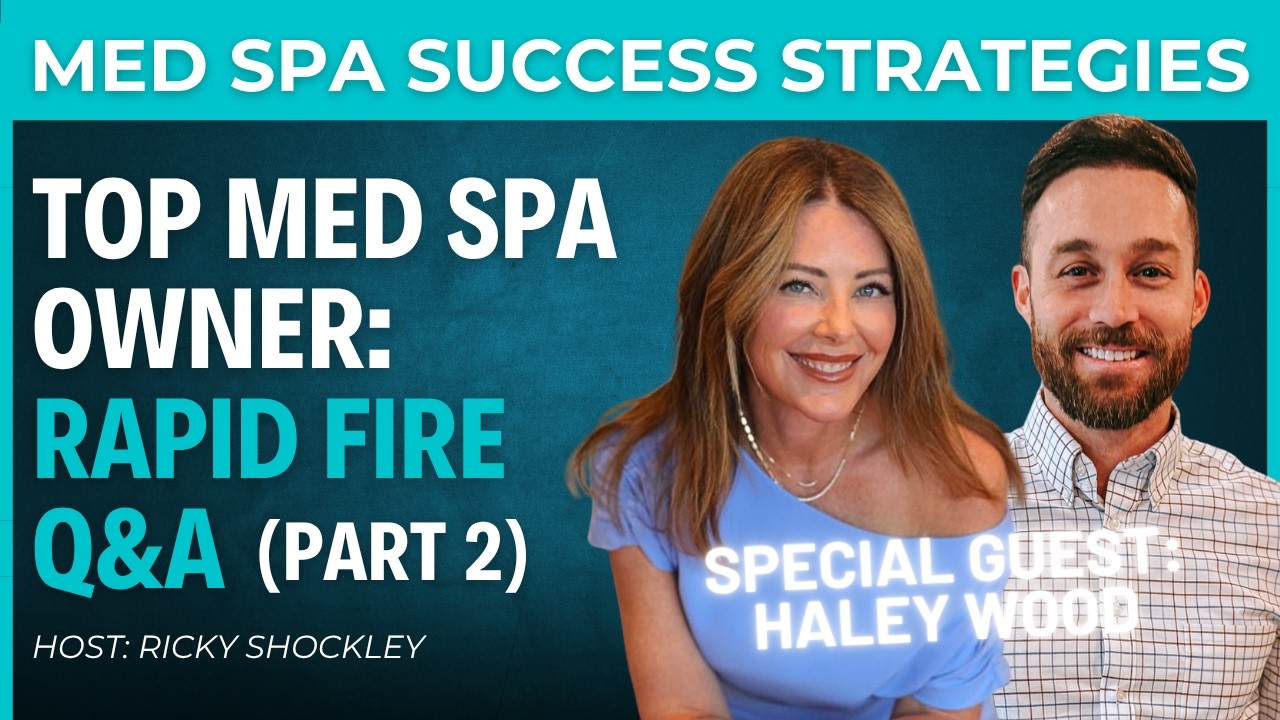
Haley Wood, a board-certified women’s health nurse practitioner (WHNP), founder of The Look Aesthetics in Franklin, Tennessee, and creator of TheAestheticCoach.com, has spent more than 17 years navigating the aesthetic landscape. Recognized by RealSelf as one of the nation’s top 25 injectors, Wood has scaled her own practice into a powerhouse while coaching emerging practice owners nationwide.
In a candid, deep-dive discussion with Ricky Shockley of Med Spa Success Strategies, Wood shared her unvarnished perspectives on the operational metrics, leadership frameworks, and tactical decisions that separate struggling clinics from market leaders.
1. The Single Metric That Matters: Why Retention Trumps Acquisition
Many med spa owners obsess over top-of-funnel customer acquisition, pouring substantial marketing dollars into generating new patient leads each month. However, when pressed to choose just a single financial metric to monitor on a morning dashboard, Wood’s answer is immediate and definitive: retention analysis.
A healthy aesthetic practice is not sustained by one-off transactions; it is built on lifetime patient value. High patient turnover creates an exhausting and expensive treadmill where the practice must constantly spend capital to replace churning clients. By tracking retention rates—both overall practice retention and retention by individual injector or aesthetician—owners gain direct insight into:
- Clinical efficacy and patient satisfaction
- The strength of patient-provider relationships
- Long-term revenue predictability and practice valuation
If retention metrics are lagging, scaling ad spend will only accelerate operational friction. Sustainable growth begins by plugging the leaks in the patient journey before attempting to expand the funnel.
2. Recruitment Strategy: The Single Screening Question That Reveals Cultural Fit
Hiring decisions in an aesthetic practice carry immense weight. A single poor hire can disrupt team dynamics, damage client relationships, and dilute brand reputation. To prevent costly hiring mistakes, Wood adheres to a clear principle: if a candidate is not an absolute “hell yes,” they are a definitive “no.”
To filter candidates quickly and effectively, Wood’s hiring process begins with a brief preliminary Zoom or phone call centered around a deceptively simple question:
“Why do you want to work for The Look?”
This question serves as an immediate litmus test for preparation, attention to detail, and genuine cultural alignment.
- The Red Flag: Candidates who admit they haven’t thoroughly explored the company’s website or social channels are immediately disqualified. If an applicant fails to conduct basic research before an interview, they will not demonstrate the meticulous attention to detail required in a high-stakes clinical environment.
- The Green Flag: Candidates who can articulate specific elements of the practice’s culture, mission, and aesthetic philosophy demonstrate proactive initiative, respect for the brand, and operational diligence.
3. High-Touch, Low-Cost VIP Experiences: The Power of Intentional Gifting
Fostering deep loyalty among high-value clients does not require extravagant budgets. Instead, it requires personalization and intentionality.
Wood recommends identifying your top 20% of patients—those who drive the vast majority of your annual revenue—and leveraging manufacturer product samples to create curated VIP gifts.
Too often, practices treat medical-grade skincare samples as an afterthought, tossing them indiscriminately into checkout bags or letting them expire on stockroom shelves. A more impactful approach involves strategic distribution:
- Track Visit Cadence: When a top-tier client returns for their routine quarterly visit, have a curated gift prepared in advance.
- Personalize the Selection: Instead of a single random sachet, assemble a dedicated small gift bag containing three or four targeted, high-end travel-size products—such as a ZO Skin Health Daily Power Defense or an advanced biocellulose recovery mask.
- Present with Intention: Present the package as an exclusive, intentional token of appreciation.
This simple ritual transforms routine samples into an elevated VIP gesture, reinforcing clinical home-care routines while making high-value clients feel acknowledged and valued.
4. Modern Practice Technology: Leveraging Claude and Optimizing for AEO
The rapid advancement of artificial intelligence is fundamentally changing how medical aesthetics practices handle administrative workflows, digital marketing, and patient education.
Claude vs. ChatGPT in Practice Operations
Within her own business operations, Wood utilizes Anthropic’s Claude as an indispensable operational tool, particularly for high-level business tasks, structured workflows, and long-form copywriting. While platforms like ChatGPT are often favored for conversational brainstorming and casual tasks, Claude consistently excels in delivering nuanced, professional, and brand-aligned business copy.
The Rise of Answer Engine Optimization (AEO)
A critical shift in digital marketing is the transition from traditional SEO (Search Engine Optimization) to AEO (Answer Engine Optimization).
As prospective patients increasingly turn to AI engines and conversational search platforms to research cosmetic procedures, website copy must do more than rank for basic local keywords. Content must be strategically structured, authoritative, and clear enough for AI algorithms to pull directly into synthesized search answers.
Working alongside experienced copywriters to design website wireframes with AEO in mind ensures that a practice’s clinical expertise remains discoverable in an AI-driven search landscape.
5. Mastering the Consultation: Transitioning from Transactional to Comprehensive Care
The patient consultation is the most pivotal clinical and commercial touchpoint in an aesthetic practice. It establishes provider authority, builds trust, and sets the trajectory of the patient relationship.
The Opening Salvo
Wood sets an immediate tone of warmth, accessibility, and curiosity the moment she steps into the consultation room:
“I am so glad you are here. How did you find me?”
This disarms the patient, opens dialogue organically, and provides immediate data regarding which referral channels and marketing pathways are functioning effectively.
The 12-Month Treatment Roadmap
The greatest mistake aesthetic providers make during consultations is remaining trapped in a transactional mindset—treating only the chief complaint presented that day (e.g., injecting 20 units of neurotoxin) and sending the patient out the door.
Instead, Wood concludes consultations by mapping out a comprehensive 6- to 12-month branded treatment calendar:
- Month 1: Initial Injectable Treatment
- Month 2: Mandatory Clinical Follow-Up & Review
- Months 3-4: Collagen Induction Therapy (Microneedling / Laser Resurfacing)
- Month 5: Skincare Maintenance / Aesthetician Collaboration
- Ongoing: Scheduled Seasonal Touch-Ups & Home-Care Reviews
By laying out a clear, structured roadmap on a branded physical calendar, patients understand that aesthetic health requires a phased, multidisciplinary approach. They leave knowing exactly when they need to return for follow-ups, when to schedule skin rejuvenation with an aesthetician, and how their individual treatments integrate into a cohesive, year-long transformation.
6. Protecting Team Culture: The Mechanics of Firing Toxic Clients
Maintaining high clinical standards requires setting clear boundaries around how patients interact with every tier of your staff. Disrespectful client behavior is a major contributor to staff turnover and toxic workplace culture.
Eradicating Staff Disparities
Early in her career working alongside board-certified plastic surgeon Dr. Moore, Wood witnessed an unsettling phenomenon: certain patients would treat front-desk personnel and nursing staff poorly, only to completely shift demeanor and become polite the moment the lead surgeon walked through the door.
Wood strictly prohibits this dynamic within her practice. Aesthetic leaders must empower their front-desk and administrative teams to flag disrespectful client behavior immediately. A patient who is charming to the provider but condescending to the front-desk coordinator is fundamentally toxic to the practice’s culture.
Drawing from Dr. Moore’s mentorship, Wood operates by an uncompromising rule:
“I would rather see the back of a difficult patient’s head once as they walk out the door forever, than see their face a hundred times coming in to complain.”
How to Professional Dismiss a Patient
When a patient crosses behavioral boundaries or repeatedly presents unrealistic, contentious expectations, leadership must intervene swiftly:
- Use the “Not a Good Fit” Framework: Do not engage in prolonged emotional debates or place direct blame. State plainly: “Based on your expectations and our clinical approach, our practice is no longer a good fit for your needs.”
- Facilitate the Transition: Offer to securely transfer their medical charts to another provider of their choice, requesting a few business days to process the records.
- Stand Behind the Boundary: Providers must overcome the fear of occasional negative online reviews. An established practice with an authentic foundation of five-star reviews can easily absorb an isolated grievance. Protecting the mental well-being and psychological safety of your team is far more critical than placating a toxic client to avoid a single bad review.
7. Increasing Retail Revenue: Shifting Providers from “Selling” to Prescribing
Skincare retail margins are vital for healthy practice cash flow, yet many aesthetic providers hesitate to recommend home-care regimens, fearing they will come across as aggressive salespeople.
Overcoming this hurdle requires shifting the provider’s mindset from sales to clinical continuity. In-office procedures deliver only a portion of the patient’s overall skin health; without appropriate medical-grade home care, clinical results degrade significantly.
The Morning Preparation System
To remove friction at checkout, Wood’s practice utilizes a structured daily preparation system:
- Chart Reviews the Day Prior: Providers review the upcoming schedule 24 hours in advance to evaluate each patient’s six-month history: What treatments did they complete? Which medical-grade products did they purchase?
- Physical Patient Tickets: The team creates physical tickets highlighting previous purchases. If a patient purchased a core hydrator or antioxidant three months prior, the provider enters the room already aware that a replenish is likely due.
- Proactive Clinical Inquiries: Rather than asking open-ended questions like “Do you need any products today?” at the register, providers tie recommendations directly into the current season and treatment plan: “Summer is approaching—are you currently using a medical-grade Vitamin C like Hydrinity to protect against hyperpigmentation?”
When home care is treated as an essential medical extension of an in-office procedure, retail adoption increases naturally without feeling forced.
8. Strategic Marketing Realities: Moving Beyond the “Social Media Person”
When evaluating practice marketing strategies, owners frequently oscillate between tactical execution and broad brand development.
The Best Investment: A Fractional Chief Marketing Officer (CMO)
For Wood, the single most effective marketing investment was hiring a Fractional CMO. Rather than leaving high-stakes positioning, budget allocations, and performance tracking to internal coordinators, a Fractional CMO provides high-level executive strategy. They evaluate channel ROI across Google, YouTube, Meta, and print, while mentoring internal marketing staff to ensure tactical efforts align with business objectives.
The Pitfall of the Tactical “Social Media Hire”
Conversely, one of the most common mistakes aesthetic practices make is hiring a junior “social media manager” in the hopes that posting regular content will solve their lead-generation challenges.
Social media is not a standalone growth strategy. Aesthetic content creation—while visually engaging—lacks impact if it is disconnected from:
- Clear customer acquisition costs (CAC)
- Intentional conversion funnels
- Direct-response booking pathways
- Comprehensive multi-channel marketing campaigns
Outsourcing social media simply because an owner dislikes creating content often leads to disjointed vanity metrics rather than measurable patient growth. A clear overarching strategy must always dictate tactical execution.
9. Navigating Industry Noise: Evaluating Capital Equipment and Hype
The medical aesthetics sector is saturated with aggressive marketing from device manufacturers and social media influencers pushing the latest wellness platforms, peptide therapies, hyperbaric chambers, and regenerative treatments.
While diversification can be beneficial, practice owners must maintain discipline when considering substantial capital expenditures.
The Three-Part Equipment Acquisition Filter
Before signing a lease on a new laser or energy-based device, Wood runs the investment through a strict three-part evaluation:
- Documented Patient Outflow: Are we actively sending patients elsewhere for this? Avoid buying equipment based on optimistic projections provided by device sales reps. Look at your current patient charts. Wood invested in advanced ablative technologies (such as the UltraClear platform) only after realizing her practice was consistently referring existing patients out to third-party clinics for aggressive resurfacing. (If Yes, proceed to step 2)
- Inherent Clinical Conviction: Do I personally use, trust, and believe in the results? If you would not enthusiastically receive the treatment yourself, do not bring it into your practice. Versatile, proven platforms—such as the Sciton Moxi—become true clinical workhorses because providers genuinely believe in their efficacy. (If Yes, proceed to step 3)
- Regulatory and Legal Feasibility: Can mid-levels and staff legally operate this device within our specific state board guidelines? Practice owners must review their specific state medical and nursing board regulations prior to acquisition. A device is an immediate liability if state laws prohibit your mid-level practitioners or aestheticians from operating it within their legal scope of practice. (If Yes, proceed to purchase)
10. Leadership Development: Mastering Crucial Conversations and Knowledge Transfer
As an organization grows, a practice owner’s role shifts from clinical provider to executive leader. This transition requires developing the emotional discipline to address underperformance, interpersonal friction, and boundary violations directly.
Recommended Leadership Reading
Wood highlights two foundational texts that every aesthetic practice leader should study:
- Unreasonable Hospitality by Will Guidara: A masterclass on elevating customer service standards to build unforgettable client loyalty.
- Crucial Conversations by Joseph Grenny et al.: An essential guide for developing the emotional courage and communication techniques required to navigate high-stakes personnel issues without escalating conflict.
Roleplaying Difficult Dialogues
Reading leadership theory is rarely enough; executing challenging conversations under pressure requires practice. Wood emphasizes the importance of roleplaying difficult conversations in advance.
Whether an owner is coaching a practice manager or preparing to address an employee directly, rehearsing the conversation out loud with a peer or mentor helps refine tone, clarify objectives, and remove emotionally charged language.
Distilling Complex Knowledge with AI
Aesthetic teams are notoriously busy, and assigning lengthy textbooks—such as detailed historical accounts of neurotoxins—rarely leads to high engagement.
To overcome this, forward-thinking leaders leverage AI tools like Claude to synthesize complex texts into concise, highly actionable frameworks. Leaders can prompt the AI to extract the top 10 clinical or leadership takeaways from a text and use those insights to anchor focused 20-minute weekly team training sessions (e.g., dedicated “Wednesday Shares”).
11. Sustainable Leadership: Daily Habits to Prevent Burnout
The operational demands of scaling a clinical practice can quickly lead to chronic stress and burnout if leaders fail to establish firm personal boundaries. Wood maintains operational resilience by committing to two non-negotiable daily anchors:
- Spiritual Grounding: Wood begins each day with dedicated prayer and spiritual reflection, intentionally focusing on establishing peace, maintaining clear boundaries, and seeking protection over her team, patients, and practice from clinical complications.
- Phone-Free Decompression: At the close of each workday, Wood takes a dedicated 15-minute walk at sunset with her Goldendoodle. Leaving her mobile device behind creates a firm psychological boundary, allowing her to process the day’s pressures, reset her nervous system, and transition into home life.
12. Cash-Flow Levers: Generating Fast Revenue Without Brand Erosion
When faced with a seasonal dip in appointment volume or a tight cash-flow month, struggling practices often panic and resort to deep discounting. Slashing prices damages brand equity, attracts low-retention price shoppers, and cannibalizes future revenue.
Instead of discounting, Wood recommends leveraging educational live streaming to drive immediate, margin-conscious bookings:
- Step 1: Announce Educational Live Stream. Notify your audience 6 hours in advance (e.g., “Deep-Dive on Microneedling & Skin Health”).
- Step 2: Deliver Value & Address Common Questions. Host a 20-30 minute session highlighting real clinical cases, science, and results.
- Step 3: Introduce Tiered Packages or Manufacturer Rebates. Offer structured multi-session packages (e.g., Buy 3, get an incentive on a 4th) or activate manufacturer programs (such as SkinPen consumer rebates).
By educating prospective clients on the clinical science behind a treatment and addressing their concerns in real time, practices generate immediate demand while reinforcing their clinical authority.
13. The Underperformance Framework: When and How to Let an Employee Go
Knowing when and how to dismiss an underperforming or culturally misaligned employee is one of the most challenging aspects of executive leadership.
Trusting Your Gut
Wood observes that practice owners almost always recognize when an employee is the wrong fit long before they take action. Leaders frequently waste months attempting to coach individuals who lack the baseline capability or cultural commitment to achieve high performance (such as maintaining an 85% patient retention rate).
A Structured Termination Process
To handle personnel transitions fairly, legally, and professionally, practices should follow a progressive accountability framework:
- Direct One-on-One Feedback: Clearly outline performance discrepancies against objective standards.
- Formal Documentation: Issue a formal verbal warning followed by a documented written warning.
- The 30-Day Performance Improvement Plan (PIP): If underperformance persists, implement a strict 30-day PIP. At this stage, the leader’s role shifts from intensive coaching to evaluation. The employee must actively demonstrate the capability to meet expectations.
- Decisive Execution: If standards are not met by the end of the PIP, the final meeting should come as no surprise. The conversation should be direct, professional, and definitive: “We have worked hard together to address these standards, but this is no longer the right fit for what the practice requires. Today will be your last day.”
Leaders must never apologize for enforcing the standards necessary to protect their business, team, and patients.
The 90-Day Mutual Probationary Window
To avoid drawn-out personnel struggles, establish a formal 90-day probationary period for all new hires. Frame this onboarding window as a mutual assessment period: both the practice and the employee are evaluating whether the partnership is a strong long-term fit.
If alignment, work ethic, or cultural fit is lacking during these first three months, parting ways is clean, expected, and free of unnecessary administrative delays.
14. What Separates Thriving Aesthetic Clinics from Those That Struggle
Having coached numerous practice owners across the country, Wood notes that the divide between thriving practices with robust EBITDA numbers and those perpetually in crisis rarely comes down to clinical injecting skill.
Instead, success hinges on two distinct leadership attributes:
- Execution Speed and Risk Tolerance: Thriving owners (such as an aesthetic entrepreneur Wood coaches in Delaware) do not overthink decisions. When presented with validated systems, they listen, rapidly adapt their operations, and demonstrate the willingness to take calculated business risks.
- Firm Boundary Management: Many owners who struggle are caught in a difficult tension between managing a demanding, high-growth business and raising a young family. Success requires strict compartmentalization. Leaders must establish dedicated operational blocks—focusing entirely on practice growth from 8:00 AM to 4:00 PM, and then fully shifting focus to family life without allowing work interruptions to bleed into their personal time.
Ultimately, building an enduring aesthetic brand requires pairing clinical excellence with operational courage. By holding firm boundaries with clients, enforcing high internal standards with staff, and making data-informed investments, practice owners can build clinics that deliver both life-changing patient results and long-term financial freedom.