- Stepping Away: How to Take a Month Off Without Practice Disruption
- The Blueprint of an Exceptional Operations Manager
- Navigating Hyper-Competition and Rethinking Practice Growth
- The Retention Metric: Moving From Transactional Care to Relational Excellence
- Practical Case Study: The “Good, Better, Best” Marketing Framework
- Strategic Discipline: Why Single-Location Flagships Often Beat Rapid Expansion
- Long-Term Talent Retention: Structuring Equity Sharing for Key Staff
- Building a Practice That Outlasts the Founder
For many medical spa and aesthetic practice owners, the ultimate dream is simple yet elusive: building a business that generates predictable seven-figure revenue while allowing the founder to step away without the fear that operations will collapse in their absence. In an industry increasingly crowded by aggressive competition, shifting consumer habits, and rising operational costs, achieving both sustainable growth and true founder freedom requires deliberate systems, clear leadership, and modern marketing frameworks.
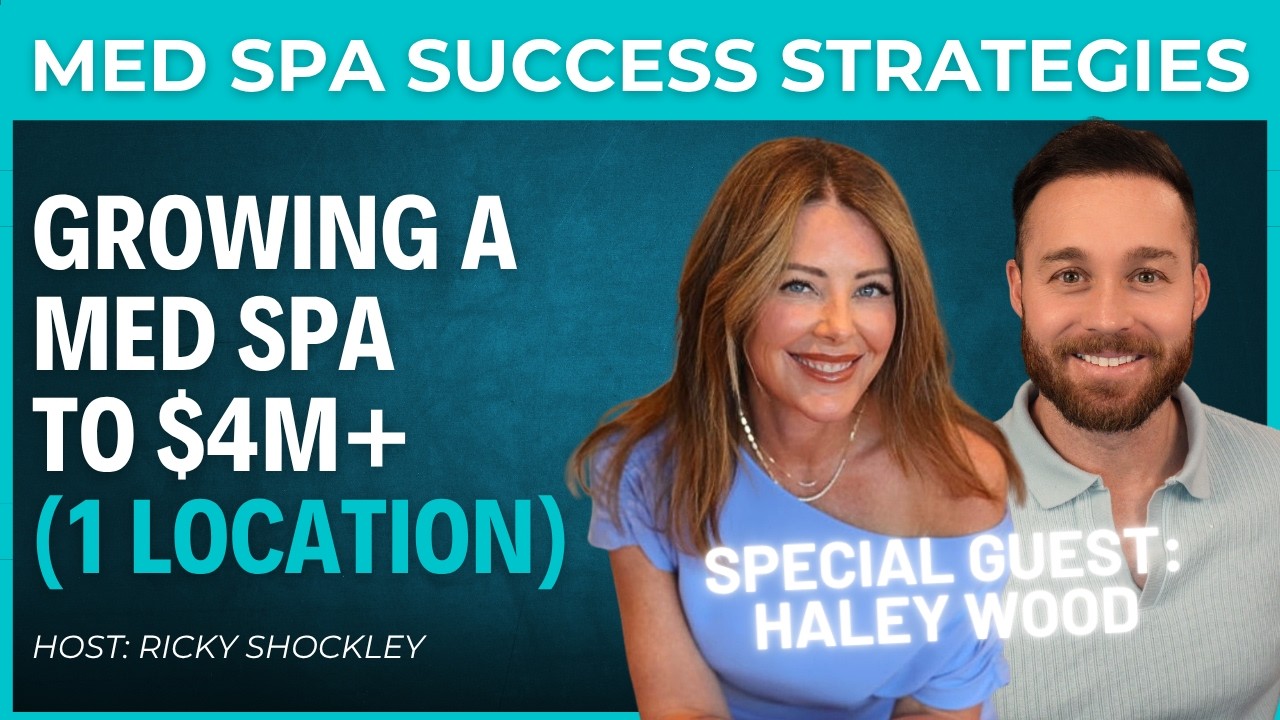
Haley Wood, a Board-Certified Women’s Health Nurse Practitioner, founder of The Look Aesthetics, and founder of The Aesthetic Coach, has navigated this exact transition. With over 17 years in aesthetics and a practice generating $4 million in annual revenue, Haley recently took a full month off from clinical practice—including 18 days traveling in Italy—without a single operational hiccup.
Here is an in-depth breakdown of the strategies, operational systems, marketing models, and retention frameworks that make a self-sustaining aesthetic practice possible.
Stepping Away: How to Take a Month Off Without Practice Disruption
Stepping away from a practice for three to four weeks is a psychological and operational hurdle for most owners. Haley’s recent month-long absence—her first extended break since her son was born 22 years ago—demonstrates that true detachment takes strategy and intentionality.
Organizational Escalation Framework
- Owner / Founder Level
- Clinical Escalation: Lead Clinician / NP (e.g., Courtney)
- Skincare & Aesthetics Escalation: Lead Aesthetic Specialist (e.g., Amy)
- HR & Operational Escalation: Practice Manager (e.g., Andrea)
1. Expect a Detachment Transition Phase
Detaching from daily operations does not happen on day one. It typically takes around 10 days to fully ease out of the habit of checking emails, reviewing daily schedules, and monitoring routine updates. Owners must give themselves—and their leadership team—the grace and space to transition into this temporary separation.
2. Establish an Unambiguous Chain of Command
To prevent non-emergency communications from reaching the owner while away, every team member must know precisely who holds authority over specific practice areas:
- Clinical Issues & Touch-ups: Directed to lead clinical staff (e.g., Courtney).
- Aesthetics & Skincare Protocols: Directed to lead aesthetic specialists (e.g., Amy).
- Operations, HR, & Personnel: Directed to the Practice Manager (e.g., Andrea).
3. Cut the “Operational Tethers”
The primary source of owner tethering during time off is rarely a major clinical emergency; it is usually low-level vendor requests, sales reps asking for inventory approvals, or routine administrative questions.
- Delegate vendor communication: Reps must be instructed to interface directly with department heads or managers for order placements.
- Trust internal safeguards: When administrative requests (such as print ad renewals or local marketing queries) arise, allow dedicated staff (such as in-house marketing personnel) to handle them according to established plans rather than stepping in prematurely.
The Blueprint of an Exceptional Operations Manager
A self-sustaining practice relies heavily on an exceptional Practice Manager. When evaluating leadership for this critical role, technical experience within aesthetics is secondary to organizational discipline and interpersonal communication.
Key Characteristics of a High-Performing Manager
- Data-Driven Organization: A high-performing manager relies on concrete metrics rather than guesswork. Maintaining structured tracking spreadsheets for staff attendance, touch-up frequency, sales figures, and operational workflows provides an objective foundation for decision-making.
- Quiet Demeanor as a Management Asset: While many assume an effective manager must be an outspoken extrovert, a calm, quiet demeanor often excels in one-on-one team management. It fosters thoughtful check-ins and reduces friction during delicate discussions.
- Proactive Strategy: A strong manager stays two steps ahead of the founder, handling recruitment, onboarding, front-desk training, and routine reporting before issues escalate.
Developing Tough Conversation Skills Through Role-Playing
One of the hardest skills for managers to master is confronting underperformance or toxic attitudes directly. Unclear expectations lead to poor performance and sudden terminations, which disrupt team culture.
To build managerial confidence:
- Role-Play Difficult Scenarios: Practice sensitive conversations together before the manager conducts them with staff.
- Provide Structured Frameworks: Model how to open conversations with empathy (e.g., “We noticed a shift in your performance this week. What’s going on in your life that might be causing you to show up this way?”).
- Address Issues Early: Resolving minor behavioral or performance shifts immediately prevents long-term cultural erosion.
Navigating Hyper-Competition and Rethinking Practice Growth
The aesthetic industry is undergoing a massive structural shift. While macro-industry reports highlight booming market demand—with purchases of aesthetic treatments increasing roughly 35% over the past five years—the number of competing providers in localized markets has grown exponentially. In many suburban and urban markets, aesthetic clinics outnumber fast-food franchises like McDonald’s, jumping from four to seven providers in a zip code a decade ago to dozens today.
| Macro Market Reality | Local Practice Reality |
| +35% Demand Increase: More total clients purchasing aesthetic services nationally. | 3x–5x Competition Increase: Heavy localized dilution of market share across competing clinics. |
In this hyper-competitive environment, maintaining a $4 million annual revenue baseline requires as much effort, strategy, and adaptation as achieving 15% year-over-year growth did in previous market cycles.
Moving Beyond “Needle Pokers”
To maintain growth and defend market share, practices must evolve away from hiring single-service injectors.
- Hire Multi-Skilled Providers: Modern aesthetic providers must be comfortable offering a full suite of skin health services—including micro-needling, chemical peels, energy-based devices, and laser therapies—rather than viewing skin treatments as beneath their clinical status.
- Eliminate Internal Silos: When a single clinician possesses expertise across both injectables and skin rejuvenation, patient trust remains consolidated. Cross-selling becomes a natural clinical extension rather than an awkward hand-off to another staff member.
- Realistic Onboarding Expectations: Building a profitable, loyal patient base in a dense market requires a long runway. New providers must be given up to three years of intentional support and mentorship to establish a mature patient panel.
The Retention Metric: Moving From Transactional Care to Relational Excellence
While many practice owners focus heavily on acquiring new patients, long-term profitability and sustainable enterprise value are driven almost entirely by patient retention.
At a $4 million revenue volume, the vast majority of weekly clinic visits come from existing, loyal patients—not new acquisitions. While acquiring 40 to 50 new patients per month provides healthy top-of-funnel momentum, long-term health depends on keeping those patients within the practice network.
| Retention Rate | Practice Health Status | Operational Diagnosis |
| 90%+ | Exceptional / Elite | High trust, consistent cross-selling, optimized treatment plans. |
| 70% – 89% | Moderate / Stable | Healthy baseline; room for improvement in follow-up protocols. |
| Below 60% | At-Risk / Leaking | Clinical disconnect, over-promising, excessive touch-ups, transactional care. |
Transforming 15-Minute Visits into Strategic Treatment Plans
To move a provider’s retention rate from 60% (serviceable) to 90%+ (elite), practice owners must transition appointments from transactional quick-fixes to relational healthcare:
- Extend Appointment Blocks: Shift routine 15-minute neurotoxin follow-ups to 20-minute intentional consultation blocks.
- Relational Touchpoints: Use dedicated time to connect with patients on a personal level rather than rushing directly to injections.
- Map Out a 6-Month Plan: Never let a patient leave without booking their next six months of treatments. Frame additional services as necessary clinical pairings to achieve optimal outcomes (e.g., pairing neurotoxins with collagen-stimulating micro-needling).
Managing Practice “Top 20s”
Every practice and individual provider must track their top 20 revenue-generating clients.
- VIP Front-Desk Protocols: Ensure front-desk teams recognize top 20 clients immediately. If a top client requests an appointment when schedule blocks are full, staff should hold authority to offer priority access or add them to dedicated end-of-day slots.
- Client Appreciation: Plan year-end recognition gifts early (e.g., organizing December client appreciation initiatives as early as June).
- Centralized Tracking: Ensure individual provider top-20 lists are cross-referenced centrally by management to prevent overlapping or redundant outreach.
Practical Case Study: The “Good, Better, Best” Marketing Framework
To maximize patient lifetime value and increase treatment compliance, practices can implement a “Good, Better, Best” packaging and consultation framework across core service offerings.
When developed alongside strategic marketing leadership—such as a Fractional Chief Marketing Officer (CMO)—this framework provides clear guidance for patients while giving providers a structured narrative to explain multi-modality treatment plans.
The “Good, Better, Best” Tiering Model
- BEST PACKAGE: Neurotoxin + SkinPen Micro-Needling + Targeted Medical Skincare (Thorne)
- BETTER PACKAGE: Neurotoxin + SkinPen Micro-Needling
- GOOD PACKAGE: Standalone Neurotoxin
Case Study #1: Tripling Micro-Needling Revenue in 5 Months
By applying focused campaign energy and the “Good, Better, Best” clinical messaging to micro-needling,The Look Aesthetics transformed a standard service into a major revenue pillar:
- Initial Revenue: ~$9,000 / month
- Post-Campaign Revenue: ~$29,000 / month (achieved within 5 months)
- Impact: Micro-needling grew to represent roughly 10% of total monthly practice revenue.
Clinical Messaging Used in Room:
“Neurotoxins relax the dynamic lines, but to erase the static etched-in line, we need to stimulate new collagen. In two weeks, we should stack your neurotoxin with a SkinPen micro-needling treatment ($350). Investing in collagen production now protects the long-term texture and structural integrity of your skin.”
Case Study #2: De-Commoditizing GLP-1 Weight Loss Programs
Weight loss programs (such as Tirzepatide or Semaglutide) have become widely commoditized through low-cost telehealth providers and online subscription services. To sell GLP-1 therapies profitably at higher price points, practices must wrap the prescription in comprehensive, hands-on care.
- The 12-Week Boot Camp Model: Rather than selling a monthly vial, package the service as a 12-week total wellness boot camp.
- Bundled Value: Include four in-person Nurse Practitioner visits, personalized micro-dosing protocols to mitigate side effects, and custom nutritional supplementation (partnering with reputable clinical supplement lines like Thorne).
- Patient Positioning: Focus on hand-holding, safety, muscle retention, and slow weight loss that preserves facial volume and skin quality—solving the exact pain points created by discount online providers.
Case Study #3: High-Converting Educational Webinars
Interactive, pre-recorded educational webinars serve as an effective conversion tool for higher-ticket procedures (such as SoftWave or skin tightening devices):
- Format: Produce a polished, ~11-minute educational video detailing the procedure, technology, and clinical indications. Avoid reading strictly off teleprompters; unscripted, authentic clinical conversation performs significantly better.
- Distribution: Broadcast the video to existing email databases and social media followers using automated event software with a live countdown.
- Live Q&A Component: Have a lead practitioner join the broadcast live during the final minutes to answer real-time audience questions.
- Tiered Call to Action: Offer time-sensitive webinar incentives mapped to the Good, Better, Best model (e.g., 10% off single treatments, 15% off paired treatments, 20% off full three-tier treatment packages).
Strategic Discipline: Why Single-Location Flagships Often Beat Rapid Expansion
When a single-location med spa reaches $1 million to $2 million in revenue, owners often feel pressured to open a second location. However, expanding physical footprint prematurely frequently dilutes brand quality, doubles overhead, and significantly increases operational stress.
The Flagship Optimization Approach
Before opening a secondary facility, maximize the physical capacity of the primary site:
- Maximize Room Utilization: Scaling a flagship facility to 10 or 11 active treatment rooms allows a practice to generate $4 million to $5 million+ in revenue under a single roof.
- Control Overhead: Operating a single location significantly reduces duplicate administrative salaries, facility leases, equipment maintenance plans, and localized marketing expenditures.
- Protect Mental Capacity: Managing multiple sites requires managing multiple management structures and cultural shifts. Maintaining a single flagship preserves owner sanity and ensures strict quality control over clinical outcomes.
Long-Term Talent Retention: Structuring Equity Sharing for Key Staff
The aesthetic industry suffers from high provider turnover. A common nightmare for practice owners is spending years training a clinician or aesthetician, only for them to depart and take hundreds of thousands of dollars in patient revenue with them.
While non-competes and standard bonuses help, offering partial equity ownership to key staff members creates true operational alignment and long-term loyalty.
Equity Structure Blueprint
- Allocated Pool: Under 20% total equity divided among key team members.
- Target Roles: Lead Clinicians, Practice Managers, Key Strategic Staff.
- Valuation Model: 3x to 4x multiplier formula for private internal purchases.
- Financing: Optional internal seller loan with set interest rates.
- Liquidation Event: Payout realized during formal institutional exit / PE acquisition (6x–8x EBITDA).
1. Legal and Regulatory Mechanics
- State-Specific Regulations: Corporate Practice of Medicine (CPOM) laws vary significantly by state. In states like Tennessee, non-physician providers or operational managers can legally hold equity shares in medical aesthetic entities. In stricter CPOM states, alternative structures such as Management Services Organizations (MSOs) or synthetic “Ghost Equity” (phantom stock) plans must be utilized.
- Valuation Standards: Practice equity given or sold to employees should be based on fair market private party valuations (typically 3x to 4x earnings), distinct from institutional Private Equity (PE) acquisition valuations.
2. Requiring “Skin in the Game”
To ensure equity holders are genuinely invested in the business’s financial health, key team members should purchase their shares rather than receiving them purely as discretionary gifts.
- Seller Financing Options: If a key manager or provider lacks capital to purchase their allocated 1% or 2% share outright, the practice owner can issue a formal promissory loan with defined interest terms, repaid over time.
- Operational Rights vs. Decision-Making: Operating agreements should explicitly state that the founding owner retains 100% operational control and final decision-making authority over practice direction.
3. Exit Alignment and Bad-Leaver Clauses
Equity structures must protect the business if an employee leaves:
- Good Leaver / Bad Leaver Terms: Agreements must specify that if an employee resigns or is terminated for cause, the practice holds the right to buy back their equity shares at predetermined valuation formulas.
- Dividend Strategy: Clearly define that routine operating profits are reinvested back into staff compensation, technology, and marketing rather than distributed as routine owner dividends.
- The Ultimate Payoff: Equity holders realize their financial windfall during a formal institutional sale or Private Equity buyout (typically targeted at 6x to 8x EBITDA multiples).
Building a Practice That Outlasts the Founder
Building a successful aesthetic practice does not require opening dozens of locations or constantly chasing cold leads through aggressive, transactional marketing.
By focusing on internal systems, empowering an exceptional operations manager, enforcing disciplined clinical treatment planning, and aligning key staff through partial equity structures, practice owners can build a highly profitable, flagship business—one that generates $4 million+ annually and continues to thrive even when the owner steps away for a month.
Key Takeaways for Practice Owners
Align Key Talent: Use formal equity sharing or phantom stock programs with bad-leaver protections to keep core clinicians and operational leaders aligned with your ultimate exit strategy.
Systemize Detachment: Establish clear chains of command for clinical, aesthetic, and HR queries before stepping away on extended leave.
Focus on Retention Metrics: Track individual provider retention rates annually. Shift clinical consults from 15 to 20 minutes to focus on long-term treatment planning rather than single-service treatments.
Implement “Good, Better, Best”: Package core services (such as toxins paired with micro-needling, or GLP-1s paired with clinical nutrition) to naturally increase average order value and patient compliance.
Maximize Flagship Capacity: Scale single-location room utilization before taking on the overhead and operational friction of multi-site expansion.