- From Niche Practice to Multidisciplinary Engine
- The Social Media Engine: Building Brand Magnetism
- The “Kingdom Within the Castle”: Scaling Multiple Providers
- Bridging Plastic Surgery, Med Spa, and Wellness Operations
- The Weight Loss Wave: GLP-1 Integration and Patient Roadmaps
- Capital Investments and Energy Devices: A Disciplined Framework
- Leadership, Operations, and Objective Management
- Personal Growth and Leadership Realities
- Long-Term Practice Acceleration
In the rapidly evolving world of medical aesthetics and plastic surgery, practice owners are constantly seeking the optimal balance between high-volume clinical execution, patient-centric care, and scalable business strategy.
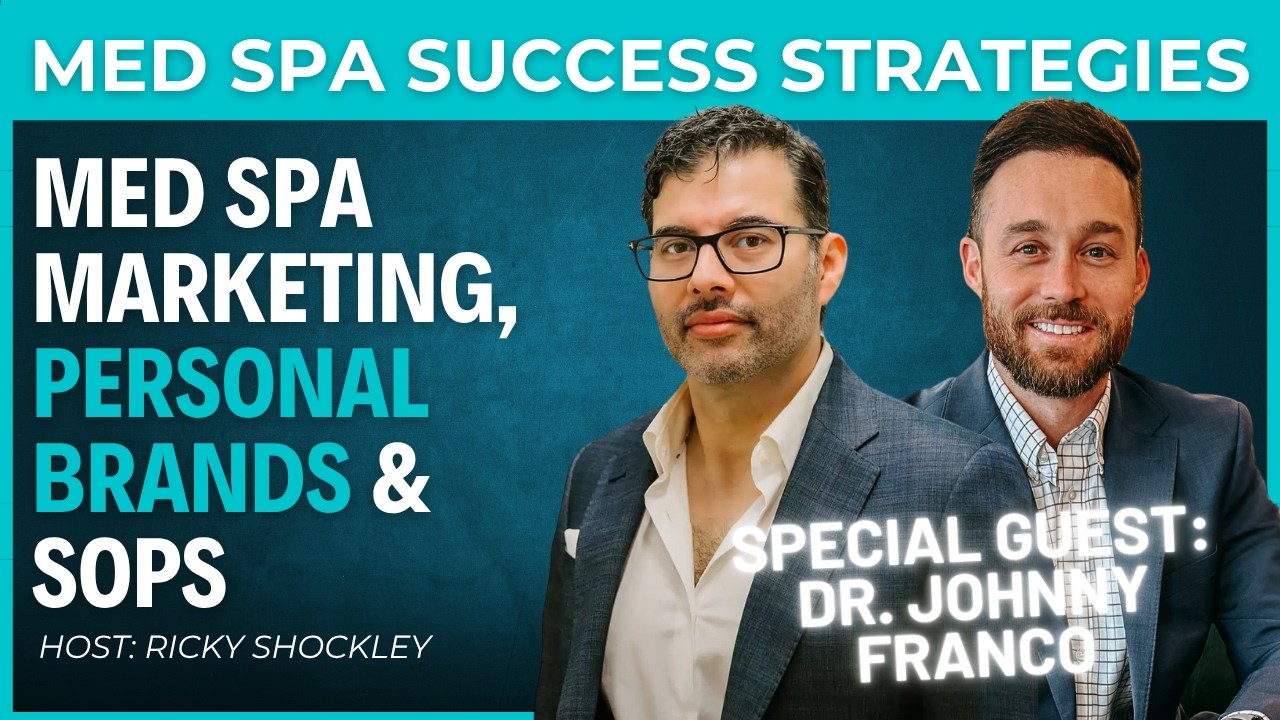
Dr. Johnny Franco, founder of Austin Plastic Surgeon in Austin, Texas, has built an enterprise that exemplifies this balance. A board-certified plastic surgeon nationally recognized for his expertise in Brazilian Butt Lift (BBL) surgery—performing hundreds each year and training fellow surgeons through the American Society for Aesthetic Plastic Surgery (ASAPS)—Dr. Franco has expanded his practice from a three-person team nine years ago to a multidisciplinary operation employing over 80 staff members across three locations. Supported by four surgeons, physician assistants, nurse practitioners, injectors, estheticians, and a dedicated fly-in concierge team serving over 30% out-of-state patients, his practice model offers actionable insights for aesthetics practice leaders.
In a conversation with Ricky Shockley, founder of Med Spa Magic Marketing and host of Med Spa Success Strategies, Dr. Franco breaks down the pivotal decisions, marketing strategies, operational frameworks, and leadership principles that drove his practice’s growth.
From Niche Practice to Multidisciplinary Engine
Transitioning from a solo surgeon practice to an 80-employee organization in under a decade is rare in the aesthetic industry. When Dr. Franco first arrived in Austin after completing fellowships in Taiwan, Belgium, and Miami, local industry representatives expressed skepticism about his core focus.
“When I first moved here, I remember a rep told me, ‘What are you doing? There’s not really a need for body contouring and lipo here in Austin.’ I was like, ‘Well, that’s what I do. So if I need to eat spam for the next couple years, that’s what I’ll do.'”
Rather than diluting his offerings to fit perceived market demand, Dr. Franco leaned heavily into his core skill set. This decision reinforces the principle that “the riches are in the niches.” By mastering a specific, high-demand procedure, he established a foundational clinical reputation that eventually attracted the cash flow and patient volume required to scale into adjacent service lines.
The Social Media Engine: Building Brand Magnetism
In competitive metropolitan markets, relying solely on direct-response advertising or pay-per-click campaigns often leads to rising patient acquisition costs and low brand loyalty. Dr. Franco attributes his growth primarily to an organic, media-first strategy inspired by digital marketer Gary Vaynerchuk: content is king.
Building a direct-to-consumer personal brand creates a “market of one.” Patients seek out a specific provider before performing a generic local Google search. In an era dominated by AI-generated media, authentic, unscripted content is becoming the primary differentiator for medical practices.
The 3 Cs of Social Media Strategy
To build an impactful content strategy without getting bogged down, Dr. Franco uses a framework prioritized by order of importance:
- 1. Consistency: Perfectionism is the primary obstacle for practice owners. Viewers do not want overly filtered or heavily scripted promotional videos; they seek authentic human interaction. Regular posting builds trust faster than polished, intermittent campaigns.
- 2. Conviction: Passion must drive content creation. Practice owners should only produce content around procedures and topics they genuinely care about. If a provider lacks enthusiasm for a specific service, they should omit it from their service menu rather than deliver subpar patient education.
- 3. Content: Content quality improves naturally with volume. As providers engage in regular filming, idea generation becomes second nature.
Operationalizing Content Creation
Time constraints remain the most cited barrier to consistent content creation. To streamline production, practices can implement several tactical measures:
- Leverage AI for Ideation: Use AI tools to identify trending local search queries and frequently asked patient questions regarding specific procedures (e.g., liposuction recovery or post-op care).
- Establish Routine Filming Windows: Block specific times into clinical calendars. Dr. Franco’s team begins each morning with a quick “Good Morning Team” clip and incorporates clinic-day whiteboard educational sessions for each provider.
- Hire In-House Media Support: Employing an in-house social media coordinator transfers the burden of editing, captioning, and formatting away from clinical staff. Modern auto-formatting tools simplify cross-platform syndication across Instagram, TikTok, Snapchat, and LinkedIn.
The “Kingdom Within the Castle”: Scaling Multiple Providers
A common challenge for founder-led aesthetic practices is transitioning patient demand from the founder to associate surgeons, physician assistants, and nurse practitioners. High-performing clinicians rarely want to work in the background of another provider’s brand.
To overcome this, Dr. Franco implemented a “Kingdom Within the Castle” framework—similar to a streaming platform model like Netflix:
| Practice Level | Provider / Unit | Core Specialty & Focus |
|---|---|---|
| Master Umbrella | Austin Plastic Surgeon | Practice Brand & Shared Infrastructure |
| Sub-Brand / Show 1 | Dr. Johnny Franco | Body Contouring & BBL |
| Sub-Brand / Show 2 | Associate Surgeon A | Rhinoplasty & Facial Surgery |
| Sub-Brand / Show 3 | Associate Surgeon B | Migraine Surgery |
| Sub-Brand / Show 4 | Med Spa Team (PAs/NPs/Injectors) | Injectables, Lasers & Medical Wellness |
By encouraging each clinician to build an independent brand identity within their clinical niche under the main practice umbrella, every provider becomes the lead of their own service line. This approach diversifies the practice’s portfolio while providing individual practitioners with autonomy and brand equity.
Bridging Plastic Surgery, Med Spa, and Wellness Operations
Integrating a med spa into a surgical practice appears logical on paper, yet many plastic surgeons struggle to execute it profitably. Opening a non-surgical wing under the assumption that surgical patients will automatically populate the med spa often leads to underutilized space and high overhead.
Avoiding Common Med Spa Pitfalls
- Avoid the “Field of Dreams” Assumption: Opening a facility is insufficient. Practices must build deliberate cross-referral pathways, such as packaging post-operative scar therapies, laser treatments, or skin-tightening protocols into surgical packages.
- Focus on Systems, Not “Unicorn” Staffing: Relying on a single high-profile injector to build a med spa creates instability. Sustainable growth requires standardized operating procedures, clinical protocols, and brand equity that outlasts individual personnel.
The “Chick-Fil-A” Operational Model
To ensure seamless integration, Dr. Franco consolidated his surgical and med spa operations into a unified patient experience across all three practice locations.
Patients enter through a single reception area, interact with a cross-trained staff, and receive a consistent level of hospitality regardless of whether they are undergoing a surgical procedure, a facial, or a laser treatment. This operational structure transformed what was once an 80/20 surgical-to-med-spa revenue split into a balanced 50/50 reciprocal ecosystem.
The Weight Loss Wave: GLP-1 Integration and Patient Roadmaps
The rise of GLP-1 receptor agonists has fundamentally altered aesthetic medicine. After personally losing nearly 90 pounds using GLP-1 medications, Dr. Franco integrated weight loss management into his practice, which now oversees nearly 1,000 weight loss patients monthly.
The Patient Care Continuum
| Phase 1: Medical Wellness | Phase 2: Skin Optimization | Phase 3: Surgical Intervention |
|---|---|---|
| GLP-1 Weight Loss Program & Metabolic Management | Skin Tightening, Energy Devices & Bio-Stimulators | Body Contouring & Excisional Surgery |
From Commodity Pricing to Outcome Management
As GLP-1 medications become widely available, practices attempting to generate high margins solely on pharmaceutical markups face diminishing returns. Long-term profitability requires framing medical weight loss as part of a comprehensive aesthetic roadmap:
- Early Intervention: Guide weight loss patients through proactive skin health treatments, bio-stimulators, and energy-based skin tightening during active weight loss to reduce tissue laxity.
- Surgical Planning: Establish weight targets prior to body contouring procedures to optimize surgical outcomes and patient safety.
- Total Cost Optimization: Show patients how proactive wellness care reduces the complexity—and ultimate cost—of future reconstructive or cosmetic surgeries.
Capital Investments and Energy Devices: A Disciplined Framework
Purchasing high-ticket medical devices ($100,000 to $350,000+) without clear utilization plans is one of the quickest ways to compromise practice cash flow. To maintain financial stability and patient trust, practices should apply strict criteria when acquiring new technology.
The 12-Month Debt Payoff Rule
Dr. Franco adheres to a firm capital allocation rule: no equipment or device is acquired unless it can be paid off completely in under 12 months.
Carrying low debt reserves allows the practice to navigate market fluctuations and prevents clinicians from feeling pressured to recommend unnecessary treatments to meet equipment lease obligations.
The New Device Evaluation Checklist
Before investing in new technology, practices should evaluate capital purchases through a structured checklist:
- Target Population Identification: Does this device address an unfulfilled need for existing patients, or does it expand the practice into a validated target market?
- Local Market Differentiation: Is the device already saturated among nearby competitors?
- Clinical Efficacy Verification: Does the technology deliver reproducible clinical outcomes, or is its popularity driven by short-term marketing campaigns?
- Transparent Marketing Expectations: Ensure patient consultations reflect realistic capabilities. Overpromising non-surgical devices as “facelift or surgery replacements” destroys patient trust and harms long-term retention.
Leadership, Operations, and Objective Management
Managing an 80-person organization requires moving away from informal management toward systematic operational frameworks.
Standard Operating Procedures (SOPs) Eliminate Friction
A common mistake in rapidly growing practices is delaying the creation of written Standard Operating Procedures. Clear SOPs prevent staff confusion, streamline onboarding, and provide clear benchmarks for performance evaluation. Defining explicit protocols empowers employees by establishing unambiguous criteria for success.
Data-Driven Staff Coaching
Managing staff through subjective impressions creates workplace friction. Leadership conversations should rely on clear data points.
Using modern AI integration tools, practices can audit thousands of patient interactions, front-desk calls, and consultation recordings to gather objective performance metrics:
| Metric Evaluated | Performance Benchmark | Action Plan for Deficits |
|---|---|---|
| Proper Staff Introduction | 100% of calls | Standard greeting script coaching |
| Consultation Booking Target | 80% baseline average | Call review & conversion training |
| Explicit Appointment Request | Included on every inquiry | Roleplay closing prompts |
When an employee falls below baseline benchmarks (e.g., booking consultations at 40% compared to an 80% practice average), coaching becomes factual and constructive rather than personal. Practice leaders can review specific recorded interactions alongside the employee, identify gaps, and establish a clear 30-day performance improvement plan.
Personal Growth and Leadership Realities
Reflecting on his career path, Dr. Franco shares a pivotal moment from an away rotation at the University of Wisconsin while applying for plastic surgery residency positions:
“After the first day, a senior student pulled me aside and said, ‘Are you here because you wanted to visit Madison, or are you trying to get a plastic surgery spot? Because if you want to get a spot, this ain’t it. You’re not showing it.’
It was a wake-up call. That conversation shifted my trajectory, and every program I interviewed with later mentioned the glowing letter of recommendation I earned from that rotation.”
Direct feedback, though uncomfortable in the moment, is often the catalyst for professional growth. Practice owners who avoid difficult conversations with underperforming staff do a disservice to both the individual and the organization. If an employee is not aligned with the practice’s standards, retaining them prevents them from finding an environment where they can succeed, while simultaneously holding back the practice.
Long-Term Practice Acceleration
Building a scalable, high-margin aesthetic practice requires combining strategic marketing, operational discipline, and unwavering clinical authenticity. By focusing on niche expertise, producing consistent organic content, standardizing operational systems, and maintaining a patient-first approach to treatment planning, practice owners can create a resilient, self-sustaining practice model.
Resources & Links Mentioned
- Practice Website: Austin Plastic Surgeon
- Instagram: @AustinPlasticSurgeon
- Marketing & Business Strategy: Med Spa Magic Marketing
- Practice Management Software Partner: Gloss Genius (Use code
strategiesfor 50% off the first two months)