Meta advertising across Facebook and Instagram remains one of the most powerful levers for scaling a medical spa. However, there is a stark divide in performance across the industry. On one hand, you have rigid, fully templatized agency approaches; on the other, you have intentional, highly strategic performance marketing.
Understanding this distinction—and mastering the systematic diagnostic framework required to fix underperforming campaigns—is the difference between paying $250 to acquire a paying patient versus paying $150, or spending thousands of dollars with virtually no return.
The Myth of the 100% Templatized Playbook
It is common practice for high-volume marketing agencies to rely entirely on copy-and-paste campaign templates. From a business model perspective, this structure allows agencies to onboard clients rapidly at lower price points.
In reality, a proven blueprint should account for roughly 75% of your foundation. The foundational plays, messaging frameworks, and audience structures can indeed be replicated from one market to another. However, that final 25% of strategic optimization dictates your actual ROI.
When a medspa relies on a 100% templatized strategy, performance usually falls into two buckets:
- The Instant Win: The campaign happens to align perfectly with local market conditions, and the practice sees strong initial traction.
- The Stagnant Loss: The campaign fails to perform, and the agency accepts the drop-off as a standard cost of doing business—letting underperforming clients churn while keeping the easy wins.
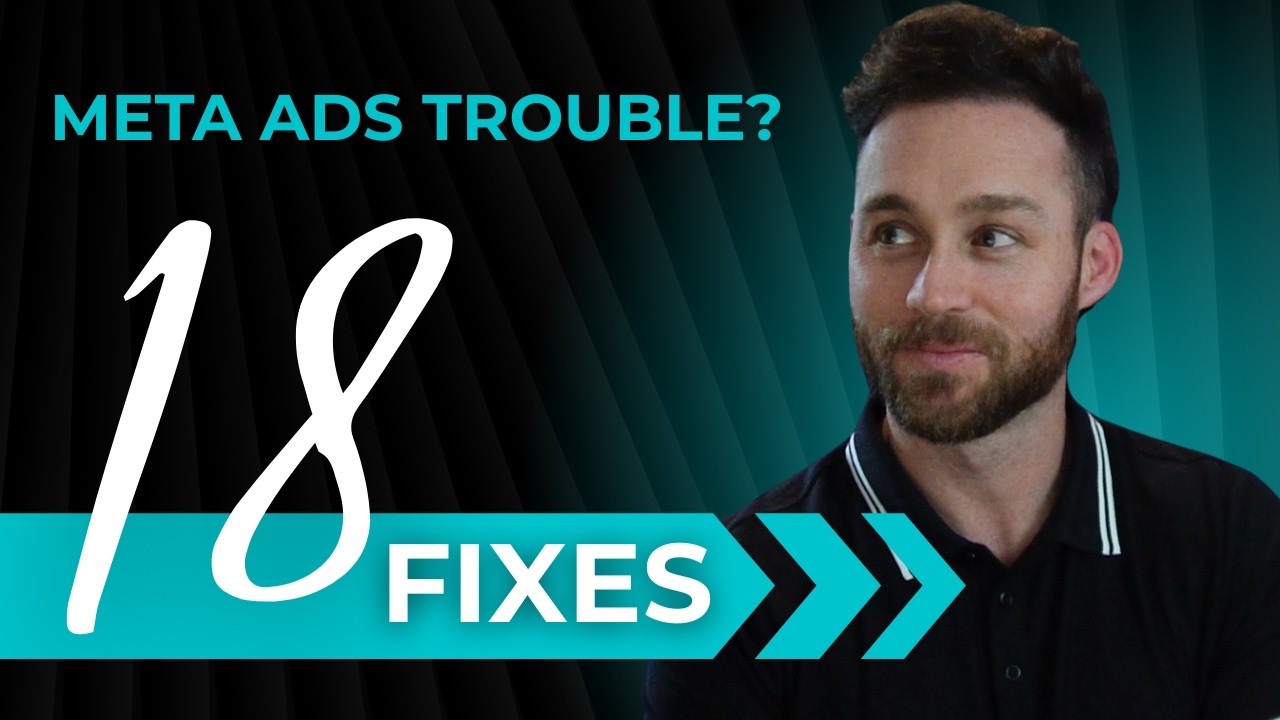
If you want to maximize patient volume, control your acquisition costs, and scale predictably, you cannot rely on copy-and-paste setups alone. You need a systematic troubleshooting methodology for when ads inevitably underperform.
When analyzing underperforming Meta ad campaigns, diagnostic issues fall into three primary operational pillars:
- Booking Volume Bottlenecks
- Customer Acquisition Cost (CAC) & Efficiency Leakage
- Patient Quality & Retention Disconnects
Pillar 1: Solving Booking Volume Bottlenecks
If your practice’s primary challenge is simply a low volume of new patient bookings, the diagnostic path is relatively straightforward. Assuming your unit economics are already sound and you are acquiring patients at an acceptable cost, you have two primary levers to drive higher volume.
Lever 1: Scale Your Ad Spend Mathematically
Many practices experience a volume bottleneck simply because their ad spend is underfunded relative to their growth targets. Paid acquisition is ultimately a game of predictable math.
Example: If your data demonstrates that every $1,000 in ad spend yields 5 booked and paid clients, and your clinic needs 15 new clients this month to fill provider schedules, your ad spend must triple. If you are sitting at 15 bookings and need 30, you must double your budget.
If your cost-per-acquisition is proven and profitable, scaling budget is the fastest, most reliable way to increase booking volume.
Lever 2: Increase Offer Attractiveness on High-Demand Gateway Services
If your campaign is running efficiently but overall ad response rates remain sluggish, your offer may lack the punch required to capture existing market demand.
Paid social advertising for medspas is primarily a demand-capture strategy. Your objective is to convince prospects who are already considering aesthetic treatments to choose your practice over a competitor down the street.
- Focus on Gateway Services: Concentrate your introductory promotions on high-demand, low-barrier treatments—most notably neurotoxins (Botox, Dysport, Xeomin). Tox products serve as the ultimate gateway drug to higher-margin medspa services.
- Lower Front-End Friction: Structure introductory pricing specifically to incentivize immediate action from high-intent prospects.
Pillar 2: Optimizing Customer Acquisition Cost (CAC) & Operational Efficiency
The vast majority of marketing performance issues do not stem from budget constraints; they stem from efficiency breakdowns along the conversion funnel. When your Cost Per Acquisition is too high, you must systematically isolate where the funnel is leaking.
Phase A: Troubleshooting High Cost Per Lead (CPL)
When your lead costs spike, your audience is communicating that your ad units are failing to generate sufficient click-through and form-completion rates. Follow this strict order of operations to diagnose and fix high lead costs:
1. Audit and Increase Offer Attractiveness
If prospects are viewing your ad but declining to submit their contact details, the offer itself is likely insufficiently compelling. Lowering introductory price points or increasing the perceived value directly improves conversion rates on your landing forms, immediately driving down your overall CPL.
2. Expand Your Geographic Targeting Pool
A surprisingly common cause of inflated lead costs is an overly restricted geographic target. If your geographic radius contains a total addressable audience below 250,000 people, significant ad spend will cause reach-to-frequency ratios to skyrocket. Your target market begins seeing the same ad repeatedly, leading to ad fatigue, declining click-through rates, and escalating costs.
Case Study: A medspa client in Minnesota experienced consistently elevated lead costs. An audit revealed that while their offer, pricing, and messaging were sound, their audience pool was simply too small for their ad spend level. By expanding their geographic radius to include adjacent, high-value suburban pockets, campaign frequency dropped, lead costs normalized, and booking efficiency improved immediately without sacrificing lead quality.
3. Reframe the Offer Presentation (Ad Copy Strategy)
Sometimes the underlying service and price point are strong, but the framing of the offer fails to resonate with the target audience.
Case Study: A client running a Dysport promotion structured her offer around a multi-area package priced at $599. After spending $750 with zero bookings, we reframed the exact same service. Instead of a $599 multi-area package, we marketed a special new-patient introductory per-unit price promotion for Galderma/Dysport.
Over the subsequent $1,000 in spend, the reframed ad generated over 10 booked and paid clients. The average initial visit revenue remained virtually identical, but reframing the value proposition transformed a failing campaign into a highly profitable play.
4. Refresh Creative Assets
Finally, audit your visual assets. If you are using static imagery, test new variations, lifestyle graphics, or clean facility visuals. If you are running video ads, recognize that video carries massive upside potential but higher performance variance. Continuously testing fresh creative assets is one of the most reliable levers for reducing CPL.
Phase B: Reducing Patient No-Show Rates
Acquiring a lead at a low cost means little if those prospects fail to physically walk through your doors. High no-show rates inflate your effective customer acquisition cost and waste valuable provider availability.
1. Overhaul Your Appointment Show-Up Sequence
The period between the initial booking and the scheduled appointment is critical.
- Maintain Consistent SMS Reminders: Ensure automated, multi-step text message reminders are deployed leading up to the appointment date.
- Eliminate Confirmation Friction: Many Practice Management and EMR systems deploy automated texts that treat the scheduled appointment as a 50/50 decision point (e.g., “Press C to Confirm or X to Cancel”). This forces the patient to re-evaluate their purchasing decision. Instead, send affirmative messages: express enthusiasm for their visit, clearly confirm the time, and subtly include a link or note referencing your cancellation policy at the bottom.
2. Elevate Your Digital Footprint (Validation Phase)
Modern patients conduct research before showing up. If a prospect books an appointment and subsequently checks your Instagram account, Google Reviews, or website only to find an unpolished digital presence, their trust erodes—leading directly to no-shows. Ensure your external channels project authority, professionalism, and positive patient social proof.
3. Introduce Credit Card Capture at Booking
Requiring a credit card hold or a small deposit at the time of booking dramatically increases appointment attendance rates.
Important Strategic Trade-off: Adding a credit card requirement introduces friction into the booking process. While your show-up rate will increase, your overall conversion rate will drop, and your front-end cost per booking will rise. However, if uncommitted no-shows are disrupting your clinical operations, this operational friction is a necessary and effective tool.
| Credit Card Capture Pros | Credit Card Capture Cons |
| • Near-zero no-show rates | • Lower overall lead volume |
| • Higher patient commitment | • Higher front-end cost per lead |
| • Operational stability for clinic | • Friction in conversion funnel |
4. Expand Appointment Availability
Practices with restricted operational hours (e.g., closed on weekends or operating only two or three days a week) experience higher drop-off rates. Patients want convenience. Expanding evening availability or opening weekend slots removes schedule barriers and directly improves attendance rates.
Phase C: Elevating Lead-to-Booked Conversion Rates
If your campaign generates a steady volume of leads but your front-desk or sales team struggles to convert those leads into scheduled appointments, run through this prioritized optimization sequence:
- Optimize Digital Trust Factors: Audit your online presence (website speed, Google Review count, Instagram aesthetic) to ensure high-intent prospects are validated when researching your practice.
- Maximize Speed to Lead: Conversion rates degrade exponentially with every hour of delay. Reaching out to a lead within minutes of submission drastically outperforms following up hours later or the next business day.
- Train Front-Desk Personnel on Consultative Selling: Front-desk staff must avoid blunt, transactional responses. Sales communication should be warm, inquisitive, and focused on building rapport, understanding patient goals, and establishing trust.
- Refine Demographic and Geographic Targeting: If conversion rates remain low, your ads may be attracting non-viable prospects. Check if your campaigns are targeting too wide a geographic radius (where prospects realize the commute is inconvenient) or skewing toward non-converting age brackets or demographics.
- Inject Social Proof into Automated Sequences: Integrate video testimonials, clinical before-and-after transformations, and verified case studies directly into your automated follow-up communications.
- Benchmark Offer Competitiveness: If your offer is significantly weaker than nearby competitors with comparable reputations, prospects who submit a lead form may ultimately book with a competitor offering a better introductory incentive.
- Enhance Automated Nurture Workflows: Build robust long-term SMS and email nurture sequences featuring welcome videos, provider introductions, and educational content to re-engage cool leads over time.
Partnering for Predictable MedSpa Growth
Managing complex paid acquisition funnels requires dedicated strategic oversight. At MedSpa Magic Marketing, we help aesthetic practices transition from volatile ad spend to predictable, high-ROI patient acquisition engines.
- Five-Star Rated on Google
- HIPAA Verified by Compliancy Group
- Proven Track Record: Scaled client practices from $30,000/month to over $120,000/month, adding millions in recurring revenue for single and multi-location medspas.
Pillar 3: Enhancing Patient Quality and Long-Term Retention
Even when a practice achieves strong lead volume, low cost-per-booking, and solid show-up rates, a final hurdle often remains: Patient Quality.
If your team feels that ad-generated patients are predominantly bargain hunters who show up once for a deeply discounted treatment and never return, your acquisition strategy must be adjusted to prioritize Customer Lifetime Value (LTV).
| High-Discount Model | Premium Positioning Model |
| • Lower Initial Customer Acquisition Cost | • Higher Initial Customer Acquisition Cost |
| • High Front-End Lead Volume | • Lower Initial Lead Volume |
| • Lower Average First Visit Revenue | • $1,000+ Average First Visit Revenue |
| • Lower Patient Retention | • High Patient Retention |
1. The Reality of Offer-Based Paid Acquisition
When utilizing offer-led Meta ads, your funnel will naturally attract a spectrum of consumers. A standard distribution might dictate that out of 10 new patients, 5 are price-sensitive shoppers who may not return, while the remaining 5 turn into loyal, high-spending long-term patients. As long as the unit economics on those retained patients cover acquisition costs, the campaign remains highly profitable.
2. Elevate In-Clinic Consultation and Rebooking Protocols
Before assuming ad leads are inherently “low quality,” audit your internal clinical experience. If provider consultations are rushed, transactional, or fail to establish comprehensive long-term treatment plans, patients will view the service as a commodity and seek alternative options for their next treatment.
A thorough, educational consultation process shifts the focus away from discount pricing and onto comprehensive aesthetic results.
3. Transition from Deep Discounts to Value-Based Positioning
If your practice wants to intentionally bypass bargain hunters, you can deliberately increase initial offer prices and shift creative focus toward brand equity, clinical expertise, and unique patient experiences.
Case Study: A client in Georgia intentionally avoids running aggressive, deep-discount neurotoxin promotions (e.g., $159 intro packages). Instead, their entry offer is structured higher: “Your first 40 units at $10 per unit.”
Because the barrier to entry is higher, their front-end Customer Acquisition Cost is elevated compared to high-discount campaigns, and booking volume is lower. However, their average initial visit revenue exceeds $1,000 per patient, and long-term patient retention is significantly higher.
By dialing back offer aggressiveness, you accept higher front-end lead costs in exchange for higher initial ticket sizes, improved clinical operational efficiency, and superior long-term retention.
The Continuous Optimization Framework
Optimizing Meta advertising is not a one-off project—it is an ongoing diagnostic feedback loop. When market dynamics shift, creative assets fatigue, or local competition changes, performance fluctuates. Having a systematic diagnostic checklist allows you to pinpoint exact operational leverage points and implement precise fixes.
Diagnostic Flowchart Summary
- Analyze Meta Ad Campaign
- If Booking Volume is Low:
- Scale Ad Spend
- Increase Core Offer Attractiveness
- If Lead / Booking Customer Acquisition Cost is High:
- Audit Offer Pricing
- Expand Geographic Radius
- Reframe Offer Copy
- Optimize Speed-to-Lead
- Require Booking Holds
- If Patient Quality is Low:
- Elevate In-Clinic Consult Process
- Raise Offer Thresholds (Increase Prices)
- Focus on Brand Equity Over Discounts
- If Booking Volume is Low:
Access the Cheat Sheet
To implement this troubleshooting matrix within your own practice or internal marketing team, download the free reference tool at: medspamagicmarketing.com/metatroubleshooting
Use this framework during your weekly performance reviews to continuously audit your funnel, optimize your campaigns, and protect your ad spend ROI.