If you’re ready to implement more efficient & effective marketing strategies for your practice, book your FREE strategy session & marketing plan: https://go.medspamagicmarketing.com/schedule
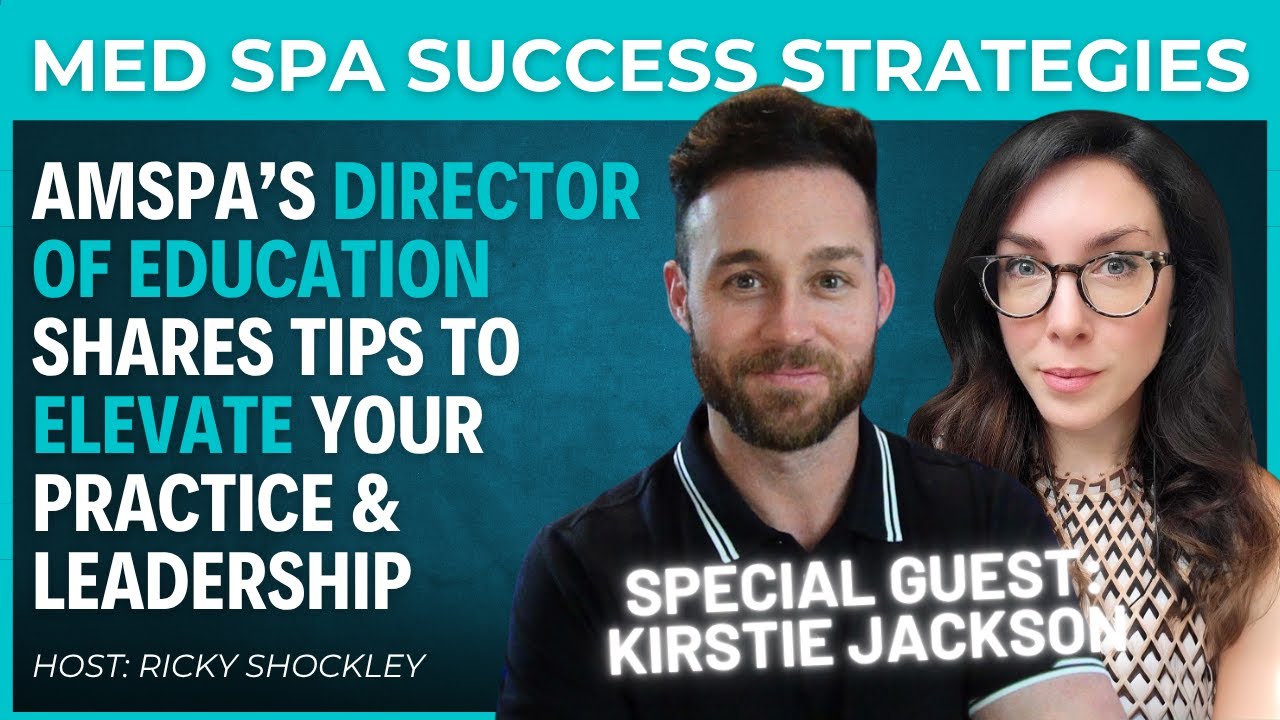
Welcome to the Med Spa Success Strategies blog! In this comprehensive deep dive, we expand upon our conversation with Kirstie Jackson, Director of Education at the American Med Spa Association (AMSPA), a recognized expert with decades of experience spanning international aesthetic, dermatology, and plastic surgery practices. This article meticulously details the foundational elements, advanced operational strategies, and leadership principles that distinguish the most successful and profitable aesthetic practices, ensuring every crucial point from the original transcript is covered.
Kirstie Jackson’s Career Trajectory: A Foundation of Multifaceted Expertise
Kirstie’s extensive background provides her unique insights into the aesthetic industry’s ecosystem.
Her career began over 20 years ago in London, working for a plastic surgeon, where she handled front desk duties, phone answering, and surgery scheduling to pay for college. Despite intending to pursue a career in fashion editorial, Kirstie made the “crunch decision” to remain in aesthetics due to her love for the industry, the science, the continuous learning, and the fulfillment of helping people look and feel their best.
She spent eight to nine years with that surgeon before moving to the U.S. and intentionally pivoting into Dermatology to add more experience to her knowledge base, recognizing it as a very different way of practicing medicine. This experience culminated in a role at a Chicago practice that was multi-specialty, incorporating dermatology, plastic surgery, and med spa services—giving her “the best of both worlds.”
Kirstie ultimately left clinical practice to join AMSPA, choosing to focus on the components she enjoyed most: education, training support, and business growth development practices.
The Foundational Non-Negotiables: Loyalty, Pricing, and the Patient Experience
Kirstie emphasizes that while many practice owners seek “silver bullet” marketing strategies, success is fundamentally built on mastering the patient relationship, service, and loyalty—the things that create “stickiness.”
1. Standing Firm on Price: The Hairdresser and Artwork Analogies
The confusion around pricing often arises because aesthetic medicine is closely related to the medical field, where insurance and different payment methods are common.
- The Hairdresser Analogy: You do not ask for a discount at the checkout after receiving a quality haircut because “when services are rendered, fees are due.” This principle is non-negotiable in aesthetics.
- Handling Discount Requests: Staff must be educated and comfortable handling this question politely and appropriately. Instead of competing on price, staff should pivot to what the practice does offer: loyalty programs like Alle or Aspire. These programs often pay the practice back the value that is discounted, making it “no discount” for the practice.
- The Artwork Analogy: When purchasing a piece of art, you pay for the completed piece and the artist’s expertise, not the individual cost of the canvas and paint. Similarly, patients are paying for the outcome of their neuromodulator or filler treatment, which is based on the experience and expertise of the chosen provider.
2. The Relationship Between Artistry and Price Point
If a med spa is truly mediocre with average artistry, maintaining a premium price point becomes incredibly difficult.
- Justifying Premium Price: Success requires top-tier artistry and a superior experience to justify higher prices.
- Connecting Strategy to Reality: This begins with defining your mission, vision, and values. Through this process, you must develop a realistic perspective of your business based on your market, competition, and community.
- Patient Experience is Everything: Studies show that approximately 79% of people will pay a higher price for a treatment or service if the experience is superior, fulfills their needs, and is enjoyable.
3. The Mechanic Analogy: Trust and Communication
Kirstie highlights the importance of checking all the boxes:
- Clarity and Confidence: Like a superior mechanic who provides clarity and communication, providers must instill trust and confidence in the patient.
- Desired Outcome: Patients are confident in paying more when they believe the practice is accurately diagnosing the issue and achieving the desired outcome.
Operational Metrics: Tracking and Efficiency
Successful practices diligently track data to inform marketing, pricing, and efficiency.
Tracking Inventory vs. Treatment Area (Neuromodulators)
From an operator’s viewpoint, tracking both is essential, but many practices usually track one or the other:
- Inventory Tracking (Units/Syringes): Necessary for financial accounting and inventory management.
- Treatment Tracking (Service Area/Outcome): Necessary for marketing and business development.
- The Problem: If a practice only tracks units, they have no data on which specific treatments (e.g., lip flips, Nefertiti lifts, platysmal bands) are most popular, hindering marketing efforts.
- The Solution: Operators should aim to know both the units/syringes used (for inventory) and the treatments/service areas delivered (for marketing). This information is valuable because if a practice is performing a high volume of a specific service, they can leverage that in social media messaging (“come to the practice that completed X number of lip flips”). Practices can often use a zero-charge treatment area in their EMR to capture the service data without affecting billing.
Balancing Appointment Times: Satisfaction vs. Profitability
Operational efficiency is crucial for margins, but it must be balanced against provider preference and patient satisfaction.
- Provider Practice Habits: Management must first understand how a provider wants to practice (e.g., quick pace vs. longer consultation). While a two-hour consult is generally a poor business decision, a provider who insists on an hour-long consultation to deliver a specific type of high-touch care must be respected.
- Business Trade-Offs: Longer consults carry higher business costs (paying the provider longer) and slightly lower profit margins, but this is not wrong if it aligns with the provider’s desired experience.
- Patient Preference: Patients seeking a more conversational, slower pace, or who need extra handholding (e.g., a nervous patient) are often seeking and willing to pay for longer appointment times.
- Avoiding Fragmentation: Kirstie strongly advises against letting patients opt-in for different time slot lengths (e.g., a “20-minute in-and-out” vs. an “hour-long consult”) for the same service. This causes operational chaos, scheduling issues, and a lack of continuity of care that looks bad optically to patients. The goal should be to get all providers to agree on a happy medium and standardize delivery.
Leadership and Culture: The Core of Retention
Kirstie calls staff retention a “sunk cost” and a “massive headache” when poor culture drives high turnover.
The Financial and Patient Impact of Turnover
- Investment Loss: It takes at least six months to fully train staff (even entry-level positions) to understand all treatments and services. High turnover means constantly losing this investment.
- Patient Perception: Patients notice staff changes and perceive a lack of continuity of care, which erodes trust.
- Culture as the Center: Culture is not “low-hanging fruit,” but the center of everything. Staff are what make the business run and must be at the core of every decision.
- The Leader’s Mantra: “Leadership isn’t simply being in charge. It’s taking care of those within your charge.” Leaders are responsible for providing an environment where competent staff feel they can learn, grow, and develop.
- Moral Injury (Burnout): The practice environment must not create “extreme limitations” that prevent staff from doing the job they signed up to do (i.e., helping people) due to extreme limitations, as this is the fastest psychological track to burnout.
Building a Scalable Leadership Team (Clarity and Foundation)
As the practice grows, the owner must transition out of “wearing all the hats.”
- Plan Ahead: If data shows a growth trajectory, the business must anticipate new roles.
- Hierarchy and Structure: Build a hierarchy chart that defines future positions (e.g., a Clinic Manager or Marketing Manager) even before they are hired. This ensures staff know who they report to and avoids confusion.
- Foundation Documents: Build a solid foundation:
- Employee Handbook and Code of Conduct.
- Job Descriptions for every role.
- Clearly defined Pay Scales.
- Transitioning Multi-Hat Roles: The idea of a single Practice Manager doing everything (hiring, marketing, scheduling, ordering) is becoming outdated. While multi-hat wearing is unavoidable in smaller businesses, as the practice grows, management must work toward giving people clarity and a singular focus in their roles. This standardization is essential for growth and operational efficiency.
Advanced Marketing & Promotional Strategies
Membership vs. Loyalty Programs (The Management Challenge)
- Membership (Skin in the Game): Patient pays money monthly into a pot for services.
- Loyalty (Reward After Fact): Patient earns rewards (e.g., 10% off skincare) after spending money.
Membership Program Risk: Successful membership programs require a practice to go all-in and make it a priority. If they are successful, the practice faces a logistical and financial challenge: a large balance of prepayments (unearned revenue) on the books.
- Financial Liability: An accountant will be concerned if the practice is sitting on too much of “other people’s money.”
- Solution: The practice must have a plan (e.g., dedicated staff or service software) to actively contact members via text/email/call to encourage them to redeem their services, preventing a buildup of liability.
Running Highly Successful Promotional Events
In-office events require planning and a clear goal to avoid being a “total bust.”
- Define Goal and Look/Feel: Determine the goal (e.g., thank loyal patients, promote a new device, maximize sales). Scout competitors’ events to decide on desired decor, specials, and atmosphere.
- Recruitment (2-3 Month Lead Time): Use e-blasts, social media, and in-office signage.
- Deposit/Skin in the Game: Charge a $25 deposit that goes toward any purchase made that night. The link should drive traffic to the website for the transaction.
- Operational Support: Ensure there are sufficient checkout stations to support the flow of people ready to purchase, especially for large open houses.
- Targeted Events: For high-ticket items (like CoolSculpting), host a smaller, highly targeted event where the goal is to have 50% of attendees book a service as an immediate measure of success.
- The Online Pivot: Some practices found great success by transitioning their events to a virtual/online format, generating significantly more revenue (one client saw 60% more revenue) and simplifying logistics. Success requires iteration—don’t give it up after one imperfect attempt.
Learn More About Kirstie Jackson:
- AMSPA: Find more information through the American Medical Spa Association at americanmedspa.org.
- Social Media: Follow Kirstie on Instagram at kirstie.aesthetics.
Med Spa Magic Marketing: If your aesthetic practice needs help with digital marketing, lead generation, and advertising on platforms like Facebook, Instagram, and Google, visit medspamagicmarketing.com.