If you’re ready to implement more efficient & effective marketing strategies for your practice, book your FREE strategy session & marketing plan: https://go.medspamagicmarketing.com/schedule
Welcome to the Med Spa Success Strategies blog. I am your host, Ricky Shockley, and my goal is to help med spa and aesthetics practice owners discover the strategies and tactics required to better market and manage their practices. We focus on growth, profitability, and creating a greater impact for your teams, your patients, and your communities.
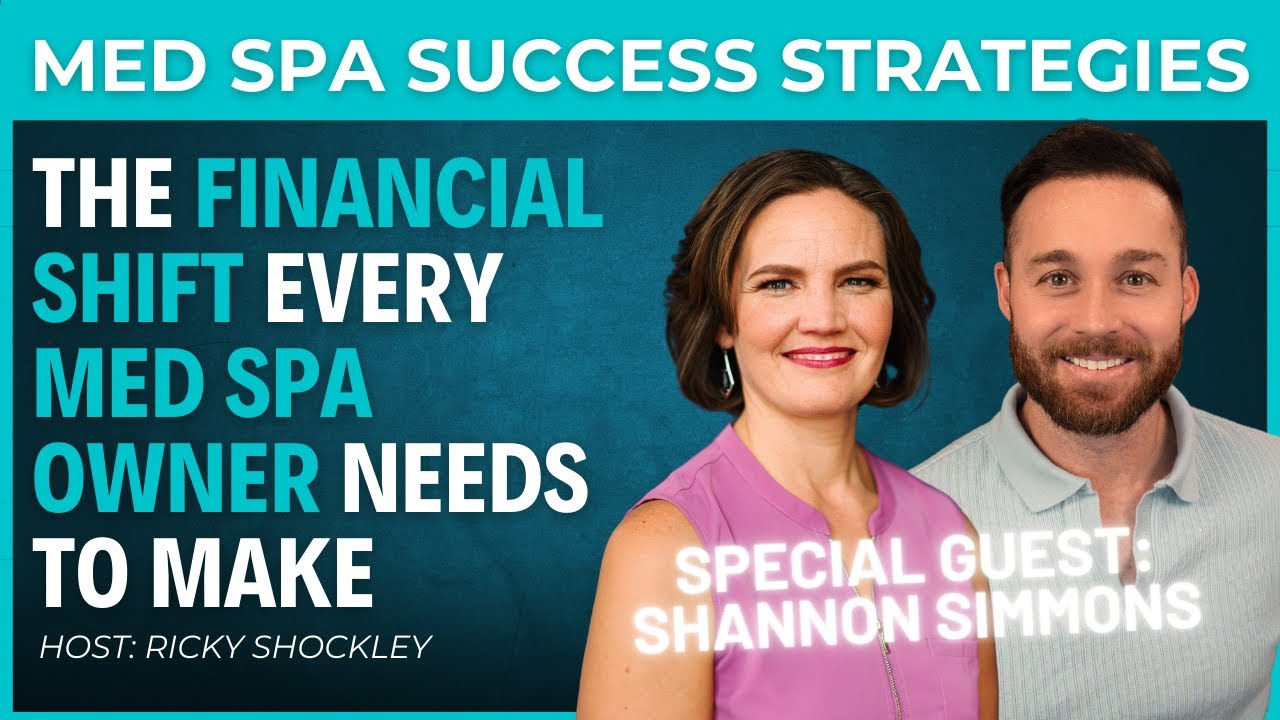
In a recent episode, I was joined by Shannon Simmons, the founder of Fit for Profit. Shannon has been helping business owners build financially sound companies since 2008 and has been a certified Profit First professional at the mastery level since 2014. Since 2016, her firm has focused exclusively on the fitness and wellness sectors. We discussed how owners can improve cash flow, reduce stress, and create more freedom in both their businesses and their lives.
Defining Fiscal Fitness in Your Business
To begin, we explored what it actually means to be “fiscally fit.” Shannon uses a framework of a three-legged stool representing the core stakeholders of any business. For a business to be stable, all three legs must be thriving:
- The Clients: They must receive the results they are looking for. This creates raving fans who provide referrals, which naturally lowers your marketing costs.
- The Team: They are the ones serving your clients. As a business owner, your job is to take care of the team so that the team can take care of the clients.
- The Owner: You must be thriving, happy, and rewarded for your work. If you are not being compensated well, you will eventually burn out. If the owner is not there to do the work, neither the team nor the clients receive the benefits of the business.
Many med spas appear successful on the surface because the team is getting paid and clients are happy, but the owner is stressed and unprofitable. This imbalance is not sustainable.
The “Always Be Hiring” Strategy
Since a high-quality team is the engine of the business, I asked Shannon about the repeatable processes required to ensure you find the right people. Her answer was simple: always be hiring.
Just as you are always selling and marketing, you should always be looking for people who stand out. Shannon recommends maintaining a “virtual bench.” This means posting a job advertisement every two to three months, whether you have an immediate opening or not.
By identifying talent early and building a relationship with potential hires, you avoid “desperation hiring” when a team member suddenly leaves. I often compare this to college football recruiting; you want your next players lined up before you need them. Furthermore, you should hire primarily for values and personality. You can teach technical skills, but soft skills like work ethic, attention to detail, and energy are much harder to instill in an adult.
Shifting Your Relationship With Money
We spent a significant portion of our time discussing the “wealth relationship shift.” If money were a person, would your relationship with them be frustrating and stressful, or would it be energizing?
Most people carry a “money story” from childhood that creates limiting beliefs. Shannon noted that for the first ten years of her firm, they focused only on practical math. However, they saw clients backslide after achieving profitability because their internal scripts—such as “I am not good with numbers”—led to self-sabotage.
Overcoming the “Head in the Sand” Mentality
Numbers are simply letters with different shapes on a page. If you are a successful business owner, you have already proven you can learn complex things; reading a financial statement is no different. Awareness is the key. Once you realize a thought is just a limiting belief, it becomes much easier to shift.
The Trap of Copycat Pricing
Many owners struggle with pricing because they don’t do the math. Instead, they copy the competitor down the street or follow what a mentor told them. This is dangerous because you have no idea what that competitor’s costs are, how they negotiated their rent, or if they are even profitable. Pricing must be an intentional decision based on your specific cost of goods and overhead.
Implementing the Profit First Framework
We frequently discuss the “Profit First” mentality. This system is designed to force cost control by switching the traditional accounting equation from Sales – Expenses = Profit to Sales – Profit = Expenses.
Starting Small for Sustainability
Shannon recommends baby-stepping your way to profitability. If you are currently at break-even, do not try to hit 30% profit in one year. Start by opening a dedicated “Profit” bank account and allocating just 1% of every deposit into it. You will find you can run your business on 99% of your revenue because you likely did exactly that a few months ago when your revenue was lower.
Cadence and Multi-Account Management
Parkinson’s Law states that our demand for a resource expands to match the supply. If you keep all your money in one operating account, your expenses will rise to consume it. By taking profit and owner’s pay off the top, you force the business to be efficient.
Shannon recommends aligning your account allocations with your payroll cadence—typically twice a month or every other week. Standard accounts include:
- Income (where all deposits land)
- Profit
- Tax
- Owner’s Pay
- Operating Expenses
To prevent the temptation to “borrow” from your tax or profit accounts during tight weeks, Shannon suggests keeping those accounts at a completely different bank. This “out of sight, out of mind” friction point prevents emotional spending.
Managing Expenses: Death by a Thousand Cuts
As businesses grow, owners often become numb to expenditures. A $500 software fee that felt huge on day one becomes a casual expense later. Shannon recommends a quarterly audit where you review three months of bank statements line-by-line.
Invariably, owners find they are paying for duplicate services (like two different calendar softwares) or “ghost subscriptions” they no longer use. If you see an expense and don’t recognize the company name, find out what it is immediately.
The Role of the Embodied CFO
Shannon draws a clear distinction between a bookkeeper and a CFO. A bookkeeper looks historically at what has already happened. A CFO looks forward to ensure decisions are aligned with where the business is going.
Every owner needs to “embody” the CFO role at some point. Even if you hire a fractional CFO, you must be educated enough to have an informed, one-hour conversation per week about your numbers. You cannot simply hand off the finances and hope for the best.
Responsibility With Debt and Large Purchases
Med spas often face massive capital expenditures for lasers and build-outs. Shannon suggests creating a separate “Equipment” account and saving for these purchases over 12 to 24 months using a high-yield savings account.
Even if you cannot pay for a machine in full, having a significant down payment reduces the amount you must finance and improves your cash flow.
Managing Debt Ratios
I have seen many spas that look successful but are dangerously overleveraged with SBA loans and credit lines. Shannon recommends a conservative rule: have no more debt than you have equity in the business (a 1:1 ratio). While some people suggest a 2:1 ratio, that can become risky.
The best way to manage the emotion of debt is to have an neutral accountability partner. When you explain a “shiny object” purchase to someone who isn’t your friend or life partner, you often hear the flaws in your own logic before they even respond.
The One Thing You Can Do Today
If you want to take control of your financial future, Shannon’s top tip is this: Go start one new bank account today. Take 1% of every deposit and put it into that account. This small habit builds the behavior needed for long-term sustainability.
Shannon and her team provide fractional CFO work, bookkeeping, and Profit First implementation. She has provided a special “Med Spa Success Kit” for listeners, which includes an assessment, a guide, and a training. You can access that at fitforprofit.com/medspasuccess.
Thank you for reading. If your med spa or aesthetic practice is in need of digital marketing services, help with advertising on Facebook, Instagram, or Google, or strategies for booking more appointments, please visit medspamagicmarketing.com. We specialize in driving predictable, massive growth, and I offer a complimentary 1-hour consultation to walk you through our frameworks.