If you’re ready to implement more efficient & effective marketing strategies for your practice, book your FREE strategy session & marketing plan: https://go.medspamagicmarketing.com/schedule
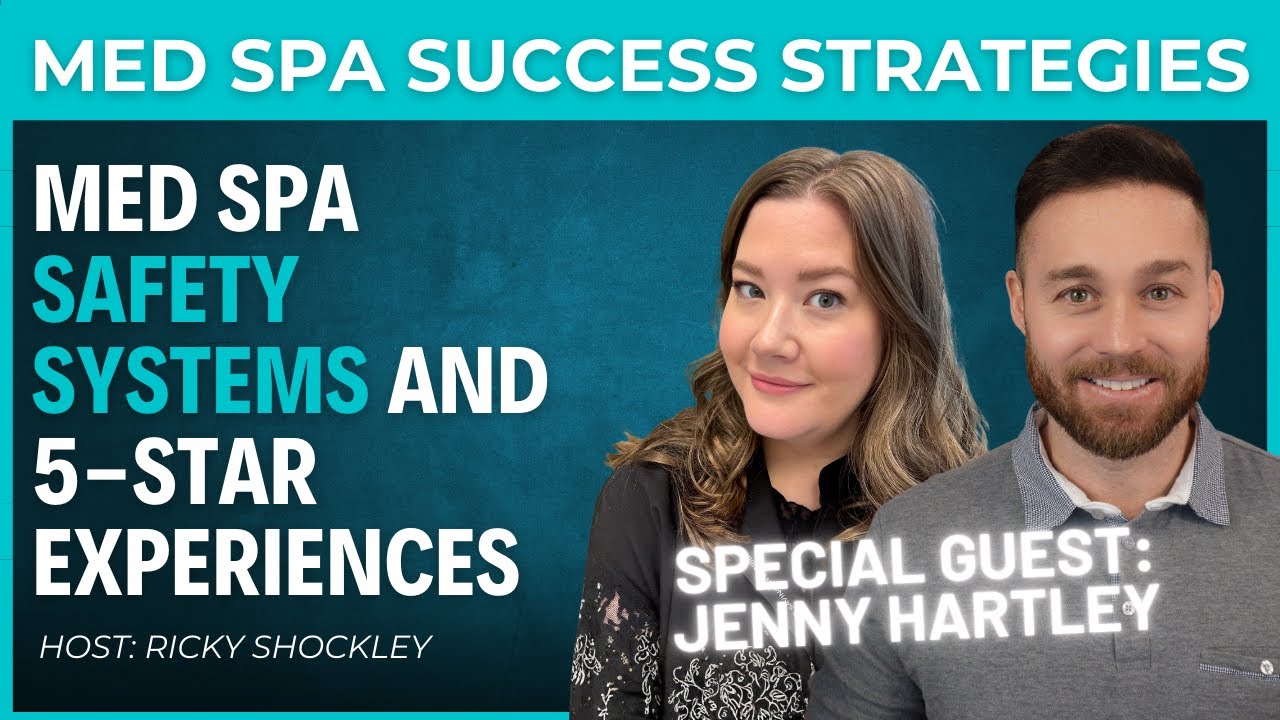
As the host of the Med Spa Success Strategies podcast, I’ve had the privilege of interviewing some of the brightest minds in the aesthetics industry. My goal is always to bring you tactics that help you better market and manage your practice so you can grow, improve profitability, and have a greater impact on your team and your patients.
Recently, I was joined by Jenny Hartley, and frankly, our conversation covered topics that aren’t even on the radar for most marketing and operations professionals. Jenny is a board-certified acute care nurse practitioner and the founder and medical director of Skin Synthesis in Seattle. She spent nearly a decade as an ICU medical director before bringing her expertise in precision and artistry to the aesthetic space.
Jenny is chasing what she calls the “Michelin Star” for Med Spas. We went deep into how she’s building that standard through obsessive patient safety, “unreasonable” hospitality, and a rigorous commitment to business education.
A Critical Care Perspective on Patient Safety
One of the most eye-opening parts of my conversation with Jenny was her “Yin and Yang” career transition. After 18 years in critical care—helping people on the worst days of their lives, often facing life and death—she now focuses on enhancing the confidence of healthy, thriving patients.
However, she brought her ICU discipline with her. In the ICU, you do invasive things to save a life. In aesthetics, procedures are elective. Because they are elective, Jenny believes the margin for error should be as close to zero as humanly possible.
Thinking Backwards to Prevent the “Code Brown”
Jenny built her practice by “thinking backwards”—identifying everything that could go wrong (infections, vascular occlusions, nodules, blindness) and building protocols to prevent them.
“We shouldn’t be doing procedures that we can’t handle the complications for,” Jenny told me.
To lead the industry in this area, Jenny hosts Vascular Occlusion (VO) Simulation Labs. Just as medical teams practice CPR through “mega codes,” aesthetic teams need to role-play emergencies so they don’t freeze when it matters most.
The Hylenex Protocol and the Emergency “Tackle Box”
We discussed common gaps in safety, and the biggest one Jenny sees is an inadequate supply of Hylenex (hyaluronidase). While some argue that ultrasound allows for less product, Jenny insists on carrying 12 to 16 vials minimum.
She also maintains an emergency kit that looks like a tackle box. It contains everything needed for a VO except the Hylenex (which is in the fridge). The box includes:
- Printed Protocols: So a team member can read instructions aloud to the injector.
- A Clear Plan: This allows the provider to focus entirely on the patient while the office “Calvary” assists in a streamlined, calm manner.
Hospitality: The “Michelin Star” Experience
In a business where people buy from people they trust, the personal connection is everything. Jenny and I talked about the book Unreasonable Hospitality by Will Guidara, which has become a North Star for her practice.
Human Connection Over AI
While everyone is chasing AI and automation, Jenny is leaning into the “human touch.” In her practice, this looks like:
- Handwritten Cards: Every new patient receives a handwritten thank-you note.
- Personal Follow-ups: One to two weeks post-treatment, Jenny (or the provider) sends a personal text to check in. It’s not a bot; it’s a human asking how the Botox is settling.
- Professional Handovers: When a patient moves from the treatment room to the front desk, there is a clear “handover code.” Jenny tells the medical receptionist exactly what was done, what the follow-up plan is, and what information needs to be sent via email.
Managing the Business: The 80/20 Rule and Ethics
One of the hardest things for providers-turned-owners is balancing financial goals with medical ethics. Jenny is obsessed with maintaining a moral compass. She avoids “chasing numbers” in the treatment room because upselling should never compromise clinical necessity.
The “VIP” Nuance
Jenny recognizes the Pareto Principle (the 80/20 rule)—that 20% of your patients drive 80% of your revenue. While she honors these “ride-or-dies” with Christmas skincare packages and extra attention, she rejects the idea of a physical VIP lounge.
“Everyone is a VIP,” she says. You never know who is a “referral whale” or who might become a high-value client over the average seven-year patient lifecycle.
Leadership and the Culture of Excellence
Managing a team requires the same “Michelin Star” intentionality as managing a patient. Jenny and her management team, Bethany and Joey, focus on:
- Color Insights: The team uses color energy (Red, Green, Yellow, Blue) to understand personality types and how each member communicates on a good vs. bad day.
- “How I Like to Be Managed” Forms: They screen for individual motivations and support needs.
- Luxury Field Trips: The team dines at high-end restaurants to observe service standards—how they are greeted, the valet experience, and even how the bill is handled—then they debrief on what to incorporate at Skin Synthesis.
- Secret Shopping: Team members visit other Med Spas to experience the patient journey from check-in to follow-up.
The Consult: A 45-Minute Roadmap
At Skin Synthesis, the consultation is a standalone event. Except for Botox, Jenny rarely treats on the same day.
The Prioritized Roadmap
Jenny uses a beautiful, physical roadmap (created with a company called Pinpoint) to give patients a one-year plan. She breaks it down into:
- Clinical Goals: Based on anatomy and lifestyle.
- The “Why”: Connecting the procedure to how the patient wants to feel.
- Prioritization: What gives the “biggest bang for the buck” first?
- Financial Fluidity: Providing clear cost estimates and financing options. Jenny believes that in 2025 and 2026, offering payment plans is a necessity to help patients “choose their own adventure.”
Becoming a Forever Student
Jenny’s final piece of advice for all of us is to remain humble and stay curious. She applies the hospital’s “Morbidity and Mortality” (M&M) mindset to her business, constantly reviewing what went well and what didn’t.
She also has a strict rule for implementation: Knowledge isn’t powerful unless it’s put into action. She won’t start a new book or attend a new conference until she has implemented at least three things from the last one.
Her Top Recommendations:
- Unreasonable Hospitality by Will Guidara
- The Energy Bus by Jon Gordon
- Traction by Gino Wickman
- The Five Types of Wealth by Sahil Bloom
Final Thoughts: Creating Your Oasis
Jenny wants Skin Synthesis to be more than a clinic; she wants it to be an oasis where the patient is the main character. By combining the safety of the ICU with the hospitality of a Michelin-star restaurant, she’s setting a standard that I think we can all learn from.
Connect with Jenny Hartley: You can learn more at skinsynthesis.com or follow them on Instagram @skinsynthesis. If you’re interested in her safety protocols or the VO simulation lab on January 24th, email admin@skinsynthesis.com.