- The Origin Story: The Power of Transformation
- Navigating the “Messy Middle” of Entrepreneurship
- The Membership Model: Why You Can’t Just “Dip Your Toe In”
- Reputation Management: Professionalism Under Pressure
- Hiring A-Players and Building Culture
- Scaling Operations: From One Location to Many
- The Fear of Provider Turnover
- Training as a Business Strategy: Restor Academy
- Marketing in the Modern Era
- Final Advice: Get Out of the Room
If you’re ready to implement more efficient & effective marketing strategies for your practice, book your FREE strategy session & marketing plan: https://go.medspamagicmarketing.com/schedule
Building a reputable, multi-location medical aesthetics practice is the goal for many in this industry, but the path to get there is rarely a straight line. It requires reinventing yourself, mastering leadership, and navigating the messy middle of entrepreneurship.
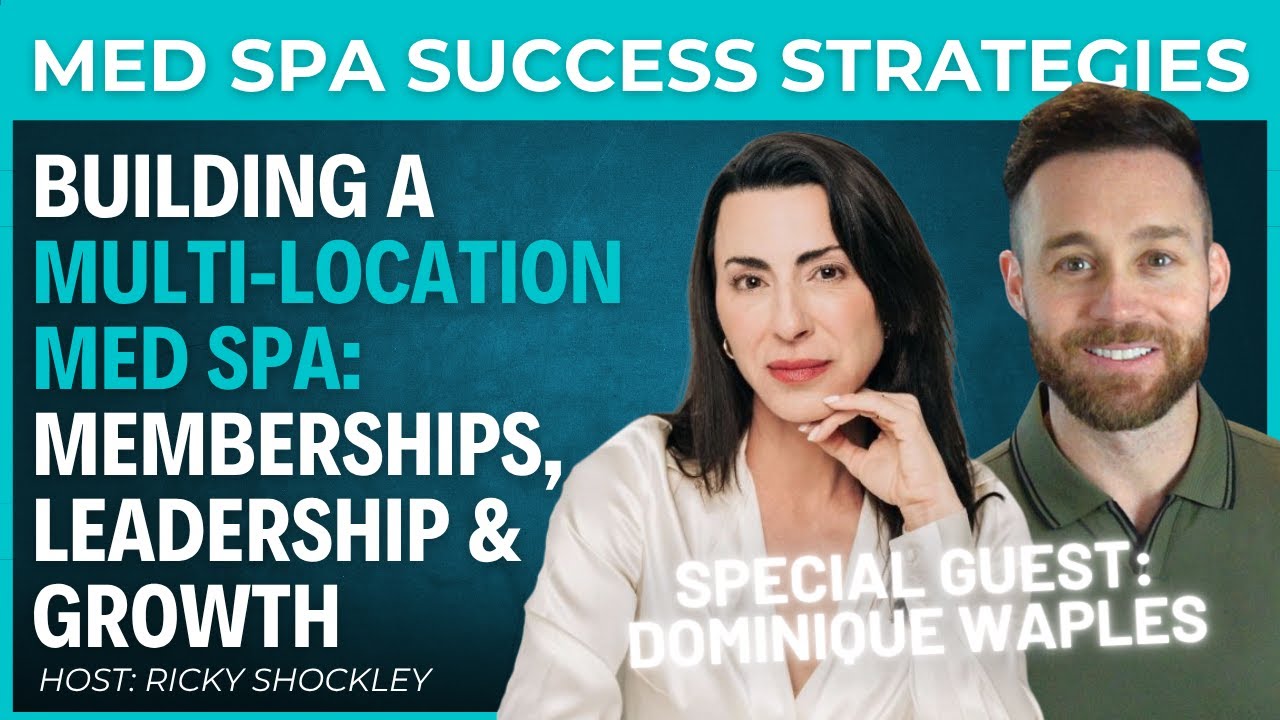
In this deep dive, we explore the journey of Dominique Waples, co-founder of Restor Medical Spa. Dominique made a bold pivot from a seven-year career as a district attorney prosecutor to becoming a leader in the medical aesthetic space. Since co-founding Restor with her sister in 2011, she has navigated the challenges of scaling, culture building, and operational excellence.
Here is the blueprint regarding how Restor went from a startup running out of money to a powerhouse brand with a training academy and multiple locations.
The Origin Story: The Power of Transformation
Dominique’s entry into aesthetics wasn’t a calculated business move initially—it was personal. While working as a prosecutor, she and her sister (Dr. Waples) decided to try Botox in their early 30s.
The results were transformative, but not just physically.
“About seven days after those initial injections, I just thought, ‘Oh my, this is it. I’m leaving law. I’m going to go open a med spa,'” Dominique recalls. “I felt more confident walking into every room today because of this. And if I’m feeling that way, other women are going to feel that way, too.”
This realization—that aesthetics is about confidence, not vanity—became the foundational mission of Restor Medical Spa: Making Aging Optional.
Navigating the “Messy Middle” of Entrepreneurship
When Restor opened in November 2011, the industry was different. The term “Medical Spa” was still vague to the general public, and the stigma around injectables was high.
Despite the clear vision, success was not immediate. Dominique admits that they did it the hard way. They assumed profitability would happen out of the gate, but the reality was starkly different.
- They ran out of money.
- They were not profitable for the first couple of years.
- They hired the wrong people.
- They bought good equipment at bad prices.
“I thought marketing was a dirty word,” Dominique admits. “I avoided it mightily for quite some time.”
The turnaround came through a dedication to client results and, most importantly, a strategic pivot to a membership-based business model.
The Membership Model: Why You Can’t Just “Dip Your Toe In”
One of the most common struggles for med spa owners is implementing a successful membership program. Many try it, fail to get traction, and give up. Dominique’s advice is clear: You cannot just dip your toe in. You are either in, or you are out.
To make memberships successful, it must be the heartbeat of the practice. It must be discussed:
- On social media.
- In email marketing.
- At the front desk during check-in and check-out.
- In the treatment room.
- In staff meetings and huddles.
The “Beauty Bank” Strategy
Restor’s initial attempt at membership was actually too good—it was a cheap Botox program restricted only to Botox. This was a mistake because Botox is a low-margin service.
They pivoted to a “Beauty Bank” model.
- Flexibility: Clients bank money monthly, which can be used on any service (lasers, injectables, wellness), not just product.
- Incentive: The more you bank, the more you save.
- Exclusivity: Members get access to VIP offers unavailable to the general public.
Ending the “Discount Trap”
The membership model solved the issue of seasonality. Instead of sending out panic-induced “20% Off” blasts during slow months—which only trains clients to wait for a sale—the membership rewards loyalty. It provides consistent revenue and allows the practice to offer special pricing to a committed group of people without devaluing the brand for the general public.
Reputation Management: Professionalism Under Pressure
With thousands of reviews and a stellar 4.9-star rating, Restor’s reputation is its currency. However, Dominique emphasizes that a reputation isn’t built when things go right; it is built on how you handle things when they go wrong.
The “Crucial Conversations” Approach
Dominique recommends the book Crucial Conversations. The core of their training for front desk staff and providers is professionalism—specifically, how to handle conversations when stakes are high and opinions differ.
“We never sit on a complaint,” she says. “You immediately reach out to that person and you handle that problem.”
The Anti-Gating Philosophy
Many practices use software to “gate” reviews, filtering out negative feedback before it hits Google. Restor does not do this. Every client gets a link to review.
“The problem is there whether you hide it online or not,” Dominique notes. “Let’s deal with the problems and run a great business.”
Hiring A-Players and Building Culture
As a former trial attorney, Dominique thought she knew how to interview. She was wrong. She realized she didn’t know what she was interviewing for.
To fix this, Restor implemented the “Who” Method (based on the book Who: The A Method for Hiring by Geoff Smart) and utilizes Culture Index personality assessments to screen the hundreds of applicants they receive.
The Million-Dollar Interview Question
To assess a candidate’s mindset toward Constant Improvement (a core company value), Dominique asks a specific question:
“What are you not good at?”
She isn’t looking for humble-brags like “I work too hard” or “I have trouble delegating.” She frames the question by explaining that a great team beats a group of individual superstars because they know when to pass the ball.
- If a candidate admits a genuine weakness: It shows self-awareness and a willingness to be coached.
- If a candidate gives a canned answer: It’s a red flag.
Compensation and Alignment
“If you pay peanuts, you get monkeys.” To attract top talent, you must pay well enough that money is off the table, allowing employees to focus on their career.
Furthermore, every decision—from buying a new laser to changing a policy—must pass a three-part test:
- Is it good for the Client?
- Is it good for the Employee?
- Is it good for the Business?
If the answer is “no” to any of those, the decision is a no-go.
Scaling Operations: From One Location to Many
Going from one location to two is often the scariest jump. Restor opened their second location in the middle of COVID with a new build that was three years delayed.
Cloud-Based from Day One
A critical success factor was Dominique’s early decision (back in 2011) to ensure all software was cloud-based.
- POS: MindBody (originally)
- Communication: Slack
- Process Documentation: Trainual
This allowed for visibility and management across locations without being physically present.
The “Location #3” Bottleneck
Dominique notes that the third location is often the breaking point where an owner realizes they cannot manage operations alone. This is the stage where hiring high-level operations personnel becomes mandatory to prevent owner burnout.
The Fear of Provider Turnover
One of the greatest fears for med spa owners is that a provider will leave and take their book of business with them. Dominique has faced this—losing providers to a former friend’s practice—but she no longer fears it.
The Reality of Turnover: When that split happened, Restor analyzed the data. They lost approximately 5 members per provider. In a practice with 600+ members, this was negligible. Furthermore, about half of those clients eventually returned.
The Lesson: If you build a brand, a culture, and a system that clients love, they are loyal to the practice, not just the person holding the needle. “If a provider leaves and takes all the clients, that provider basically had their own business inside of your practice,” Dominique argues. “That means the owner didn’t take responsibility for marketing and the client experience.”
Training as a Business Strategy: Restor Academy
To combat the industry-wide shortage of experienced, qualified injectors, Restor stopped looking for “unicorns” and started building them.
They launched Restor Academy, a training institution that serves two purposes:
- Internal Bench Strength: It creates a pipeline of talent. They hire for personality and train for skill over a two-year period.
- External Revenue: They offer their training modules and in-person training to other practices on a subscription basis.
“Always Be Hiring” Dominique advises that you should never stop interviewing. You need a bench. If you wait until someone quits to start looking, you are already too late.
Marketing in the Modern Era
Dominique’s philosophy on marketing is refreshing: Marketing is not about tricking people.
While they utilize SEO and digital channels, their best marketing is their product. Over half of their clients come from referrals. In an era where AI and technology make consumer research more transparent than ever, you cannot hide behind slick ads. You have to have the goods.
Final Advice: Get Out of the Room
For the med spa owner looking to scale from one location to multiple, Dominique offers one final piece of advice:
You must work yourself out of the treatment room.
“If you can’t do that, you can’t focus on growth,” she says. “It will be monetarily painful for a while. But you have to be willing to work through that to get to the next level.”
Resources Mentioned
- Book: Crucial Conversations
- Book: Who: The A Method for Hiring by Geoff Smart
- Book: Unreasonable Hospitality (Mentioned by Ricky)
- Tool: Culture Index (Personality Assessment)
- Tool: Trainual (SOPs and Training)
Connect with Dominique
- LinkedIn: Dominique Waples-Trefil
- Website: Restor Medical Spa
- Training: Restor Academy
This article is based on an episode of the Med Spa Success Strategies Podcast, a production of Med Spa Magic Marketing. If your aesthetic practice needs help with digital marketing, lead generation, or booking more appointments, visit medspamagicmarketing.com.