If you’re ready to implement more efficient & effective marketing strategies for your practice, book your FREE strategy session & marketing plan: https://go.medspamagicmarketing.com/schedule
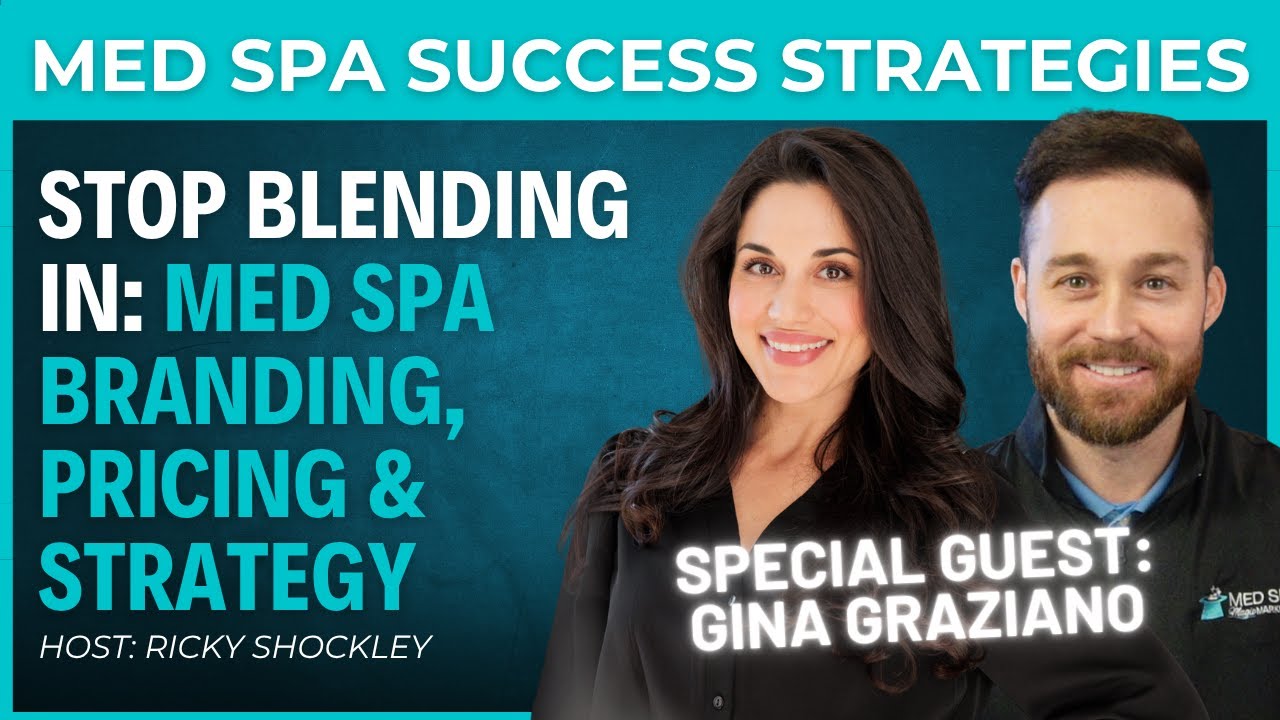
In the fast-paced world of medical aesthetics, practice owners often find themselves balancing two distinct roles: the clinical visionary and the business strategist. To navigate this complex landscape, I sat down with Gina Graziano, the founder of The Med Spa Matchmaker.
Gina is a respected leader in the industry with over a decade of experience in sales, marketing, and business strategy. She acts as a specialized advisor to private equity and financial institutions and has helped sculpt countless new med spas into thriving practices.
In this deep dive, we cover a diverse range of topics essential for modern practice owners—from the “branding blueprint” and ethical sales psychology to the hard math of provider profitability and navigating industry seasonality.
Part 1: The Branding Blueprint
As a digital marketing agency, we often admit our own flaw: we can get too transactional. We fall in love with direct response advertising because we can tie it to immediate numbers. However, the long-term goal for any practice is to develop a brand that is magnetic—one where patients actively seek you out, rather than you chasing them.
When we discuss branding, most practice owners struggle to define it. When asked what makes them special, the typical answers are:
- “Our Medical Director is renowned.”
- “We have state-of-the-art technology.”
- “We have a beautiful facility.”
While these are great assets, they are not a brand.
A brand is the sentiment your patient has when walking into your practice. It is the language you use—do you call them patients, clients, or “babes”? It is your specific point of view. If you cannot answer why you are the best at a specific niche, you have a business, but you don’t have a brand.
The Reality of Market Saturation
To understand the urgency of branding, look at the market data:
- In 2010: There were approximately 1,600 med spas in the United States.
- In 2024: There are over 10,800 med spas.
The days of easy 30-40% year-over-year growth are slowing down. The market is crowded. The practices that are succeeding today are those that have a strong brand and aren’t afraid to niche down.
“The Riches are in the Niches”
You cannot be a master of everything. The winning strategy is to start narrow and expand later.
This doesn’t mean you have to be exclusionary. For example, if your target demographic is 40-something women, you might build a brand around “The Mom Tummy.” You offer treatments specifically for C-section scarring, vaginal tightening, and abdominal muscle rehabilitation.
By speaking directly to that specific need, you attract that specific patient. Does this alienate others? No. If someone just needs Botox and searches “Botox near me,” they will still find your reputable practice. But by owning a niche, you cut through the noise.
Brand Voice Over Brand Font: Be Memorable
A common mistake in med spa marketing is prioritizing facts over stories. Scroll through Instagram, and you will see endless posts that look identical: “Hi, I’m Nurse Sarah, and here is what Botox is.” Or “I’m Nurse Karen, and here is what hyaluronic acid filler is.”
Educational content is necessary, but it isn’t memorable. It doesn’t give the patient insight into who you are. To be memorable, you must share your philosophy:
- What brands do you use and why?
- What is your artistic approach?
- Why should they choose you over the spa down the street?
The “Research” Phase: Even if these posts don’t get massive viral reach, they serve a critical purpose. A prospective patient needs to see a brand 6 to 8 times before it resonates. When they find you via an ad or a Google search, they will go to your social media to research. Your content needs to be there to validate their decision to book.
Part 2: Name Your Method (Packaging & Pricing)
One effective way to stand out is to “Name Your Method.” This is not about taking generic treatments, disguising them with a fancy name, and gouging the price. That is inauthentic and damages trust.
Instead, this strategy is about retention.
When a patient is new, they are often price-shopping commodities like toxins. To keep them in the practice, you need packages or memberships that offer clear value.
The “Tox Club” Strategy
Everybody sells toxins. To compete, consider implementing a “Tox Club.”
- The Structure: The patient commits to a certain frequency or volume.
- The Benefit: They receive a transparent discount.
- The Goal: Stop them from shopping around for a cheaper unit price elsewhere.
Strategic Packaging
Avoid creating memberships so complex that patients need a manual to understand them (e.g., “One facial this month, an IV next month, but a laser in Q3…”).
Keep it simple. Create packages of 1 to 3 items that deliver a specific outcome, such as a “Glow Recovery Protocol” (RF Microneedling + A Peel + Skincare).
- The Math: Typically, you might discount the individual items by ~25% to create the package price.
- The Trade-off: You give up a small margin, but you get the cash upfront and the patient’s committed loyalty.
Part 3: The Sales vs. Education Paradox
We often see a specific anomaly in high-end med spas: High Initial Visit Revenue but Low Retention.
For example, a practice might have an average first-time ticket of $1,000+ for Botox, but a retention rate of only 45%. Why? Usually, it’s sticker shock. The patient gets excited in the consult, spends the money, but goes home and realizes they can’t afford to maintain that regimen.
The Provider’s Dilemma
This happens because of the internal conflict providers face. Providers are caregivers; they are not salespeople. They often view “sales” as a dirty word.
However, we must reframe this. Your role is not to sell; it is to educate. It is your duty to tell the patient every option available that is the correct answer to their ailment.
If a patient has pigmentation issues, you must tell them about the lasers, the topicals, and the skincare that will fix it. If you withhold that information because you are afraid of the price tag, you aren’t helping them.
The Art of the Consultation
To balance high sales with long-term retention, you must master the consultation.
- Ask Before You Offer: Never point out a flaw the patient hasn’t mentioned.
- Establish Constraints: Ask about their timeline. Is there a wedding next month? Do they want a “low and slow” approach so no one knows they had work done?
- The Budget Talk: Don’t save the price for the very end—that creates a “monster” in the room. Drop pricing casually throughout the conversation.
- “We can do facials to clear the skin; usually, you need three, and they are about $250 each.”
- “Botox is $12/unit, typically landing around $350 per area.”
By weaving the numbers into the education, you allow the patient to self-sort. They will signal you if they are over budget, allowing you to adjust the plan before the awkward closing moment.
Part 4: The Break-Even Math
Perhaps the most viral topic Gina has discussed recently is the math regarding provider profitability. There is a misconception among staff that med spas “print money.” They see a $500 treatment and assume the owner pockets the majority.
To combat this, owners must understand—and share—the Break-Even Formula.
The 3.5x Rule
After auditing the books of over 65 med spas, Gina has found a consistent metric: A practice is rarely profitable on an injector unless that injector produces 3.5 times their total cost to the practice.
- Total Cost Includes: Hourly rate + Commission + Benefits + 401k + Health Insurance + Taxes.
- The Calculation: (Total Provider Cost) x 3.5 = Break Even Revenue.
If you are paying an injector $5,000 a month (all in), they need to generate roughly $17,500 just for the business to break even on them. This covers the overhead, the marketing, the product cost, and the facility.
Transparency is Key: Sharing these numbers with your team is powerful. When they understand that a healthy med spa only profits 20-30%, they understand why commissions are structured the way they are. It aligns the team under a shared goal of sustainability and reinvestment.
Part 5: Capital Equipment and Conferences
Navigating the world of device sales requires a discerning eye. There is a difference between “User Summits” (true education on how to use devices you own) and “Sales Events.”
The “End of Year” Trap
In Q4, every device rep will push the “Section 179” tax write-off urgency. They will tell you that you must buy in December to get the best deal and the tax benefit.
While the tax benefit is real, the operational reality is often a nightmare:
- The Queue: Everyone buys in December. You get in a long line for shipping and installation.
- The Training Delay: You likely won’t get trained until February.
- The Missed Season: You miss the peak “Laser Season” (Winter) while the machine sits in a box.
The Strategy: Don’t wait until December. You can negotiate those deals earlier in the fall, get trained immediately, and capitalize on the busy season. Do not be swindled by the calendar.
Part 6: Managing Seasonality
If you want to beat the “ebbs and flows” of the industry, you must plan ahead. The rule of thumb is to plan for winter during the summer.
The Timeline Reality
If a client wants pigment-free skin by the holidays, they cannot walk in on December 1st. Pigment correction is a two-month transformation. That journey must start in September.
You must educate clients on these timelines during the summer. Create packages with a “countdown to the holidays” theme. This creates urgency and locks in revenue during slower months.
The “January Hangover”
Historically, the industry sees a spike in Q4 (revenue jumps of 40-65%), followed by a lull in January and February as consumers recover from holiday spending.
To combat this, successful practices are pivoting toward Functional Aesthetic Medicine.
- The Shift: Moving beyond just Botox and Lasers.
- The Offerings: Peptides, Hormone Therapy, IVs, Exosomes, and Salmon DNA therapies.
- The Benefit: These treatments are not seasonal. They are not tied to sun exposure (like lasers) or vanity timelines. They are health-based.
By integrating functional wellness, you create a recurring revenue stream that is immune to the traditional seasonality of the aesthetic calendar.
This article is brought to you by Med Spa Magic Marketing. We help med spas and aesthetics practices grow with more effective marketing strategies. If you are interested in a comprehensive marketing plan, we offer a 90-minute planning session for new prospects. We will outline the exact blueprints we would implement for your business—yours to keep whether you hire us or not. Visit medspamagicmarketing.com to learn more.
About the Guest: Gina Graziano is the founder of The Med Spa Matchmaker. She helps practices refine their operations, sales, and branding.
- Instagram: @medspa_matchmaker
- Website: TheMedSpaMatchmaker.com