If you’re ready to implement more efficient & effective marketing strategies for your practice, book your FREE strategy session & marketing plan: https://go.medspamagicmarketing.com/schedule
Here is a concept that might sound counterintuitive to many practice owners: Most of you are not spending enough on your advertising to make your marketing investment profitable.
I recently released a video discussing body sculpting advertising. In that analysis, I highlighted how body sculpting often carries a high Customer Acquisition Cost (CAC), yet when you look at the total financial picture, it can be incredibly profitable.
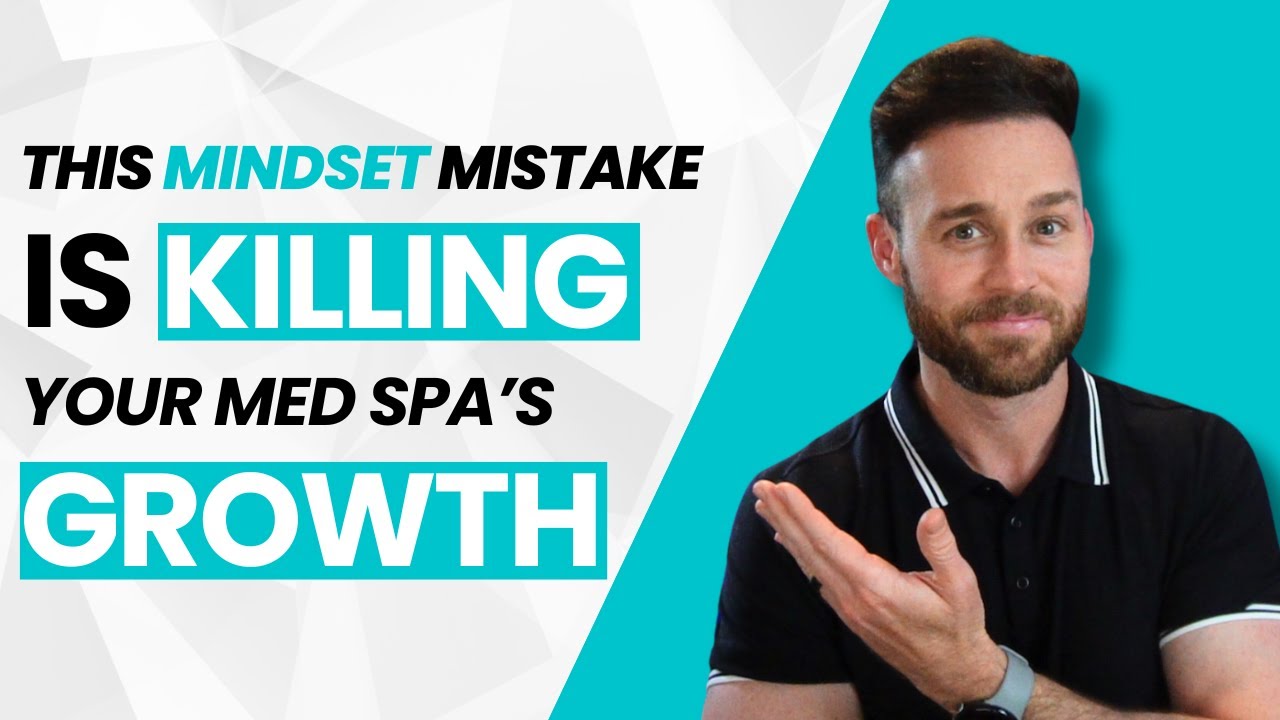
However, there is a fundamental disconnect I see when talking to MedSpa owners. It is one of the biggest challenges we face as a data-heavy digital marketing agency: the disconnect between viewing marketing as an expense versus an investment that produces a positive ROI.
In this article, I want to explore how spending more on your marketing—provided the numbers align—is actually the catalyst for helping you grow and improve short-term profitability. But I also want to discuss the delicate mathematical balance required to make that a reality.
The “Expense” Mindset: A Case Study in Failure
I spoke to a practice owner in South Florida last week who was struggling with her ad performance. Her situation provides a perfect case study on how conservative spending can actually lead to financial failure.
She was spending $3,000 a month on agency retainers and fees, but she was struggling to see results. To be fair, she was running ads that were set up for failure from the start—strategies with a low probability of success. Lacking clear data and feeling the pressure, she started to feel that marketing was a bad investment.
Her reaction was to pull back. She dropped her ad spend all the way down to $600 a month.
Simultaneously, this MedSpa had just launched what was likely going to be their most effective ad. I want to demonstrate the danger of not spending enough money and how this decision effectively destroyed her profitability and growth prospects.
The Metrics
In her case, she was positioned to see an acquisition cost under $100 for injectables. By all available evidence, this is a great number.
- Initial Visit Revenue: $400
- Customer Acquisition Cost (CAC): $80
If she spends $80 to get a client who spends $400, she is creating a good Return on Ad Spend (ROAS) right out of the gate. Long-term—over 6, 12, or 24 months—this is set up to be a super profitable campaign.
The Problem with Low Volume
The challenge is that at a threshold of only $600/month in ad spend, she is not generating enough revenue to offset her fixed costs (retainers and management fees). She is spending so little that she is actually turning a winning campaign into a losing investment.
At this investment rate, even with a successful ad campaign (getting $80 leads), she was positioned to go into the hole in terms of negative cash flow month after month.
The “Conservative” Financial Timeline:
- Month 2: She is roughly $3,000 in the hole.
- Month 4: She is $6,000 in the hole.
- Month 9: She is nearly $9,000 in the hole.
Because of the low ad spend, she isn’t offsetting her other expenses—Cost of Goods Sold (COGS), retainer, and fees—enough to make the campaign profitable. In this scenario, it would take until Month 10 for this strategy to turn profitable.
When I looked at these numbers, I told her: “You’re right to be worried. This is not going to be successful. But it’s not because the strategy isn’t working; it’s because you aren’t spending enough money to offset your expenses to create profitability and real growth.”
If she continued on this path, treating marketing as an expense to be minimized, the growth would be agonizingly slow:
- It would take 24 months just to add $11,000 in monthly revenue growth to the practice.
- It wouldn’t become net cash flow positive (all-in) until 19 months into the strategy.
This is the disaster of seeing marketing as an expense rather than an investment.
The “Investment” Mindset: A Case Study in Aggression
Now, let’s look at the flip side. Let’s say all other variables remain equal—same offer, same creative, same $80 CAC—but she decides to be aggressive.
Instead of $600, she decides to spend $5,000 a month on ad spend.
The Aggressive Outcome
- CAC: Still ~$80.
- Volume: The campaign now generates 60 clients a month.
Because the volume is significantly higher, the revenue generated completely eclipses the fixed costs of the agency and the variable costs of the product. This creates immediate net positive cash flow for the business and dramatic growth.
The Aggressive Financial Timeline:
- Immediate Impact: Instead of waiting 24 months to grow by $11k, she is now growing by $25,000 in an instant.
- Year 1: She is at $50,000 in monthly revenue growth before the first year is up.
- Month 24: She is at nearly $100,000 in improvement to her monthly revenue.
The Total ROI: By simply increasing the spend, this campaign has now generated $1.4 million in 24 months and over $600,000 in net positive cash flow (after COGS and the fixed marketing expense of an agency).
This illustrates the potential disaster you face when you let fear dictate your budget. I see this happen way too often where people think, “I’m uncomfortable seeing the money go out, so I’m going to trim it back.” In reality, you are killing your short-term prospects at profitability.
The “Money Printer” Analogy
To further illustrate this, let’s look at a current client example involving a Dysport campaign.
We have a conversation with a client recently who is spending $2,000 a month on ads. We have a new patient Dysport campaign that is super dialed in.
- CAC: ~$50 (This is a crazy good result).
- Current State: At $2,000/month, they are creating immediate net positive cash flow after retainer, fees, and product costs.
The Growth Trajectory: Over the course of 12 months, based on this data, they are positioned to grow the business by $35,000 a month. If they were doing $100,000 a month previously, they are now doing $135,000 a month just from this ad campaign alone.
- 24-Month Revenue: Almost $900,000.
- 24-Month Net Profit: $400,000.
The Logic Puzzle Now the question becomes: If you know your numbers, and this is creating immediate net positive cash flow and accelerated growth, why wouldn’t you invest more?
By not investing more money, you are essentially saying you don’t want the free money that is on the table. If you have a money printing machine in your business where for every $1 you put in, it prints out $3, $4, or $5, and you decide not to put the dollar in, you are giving up free money.
It is an illogical decision. However, I understand the emotional decision people make. They have a certain comfort level with the amount of money leaving the bank account. But if your campaigns are setting you up for success, the only thing hindering your ability to grow faster is your unwillingness to invest in an effective strategy.
The Nuance: Cash Flow vs. Long-Term Growth
There is one major consideration that complicates this philosophy: Short-term cash flow impacts versus long-term growth.
Aggressiveness alone does not solve the short-term cash flow problem if your margins and acquisition costs aren’t balanced.
I spoke to a client this month who wants to spend a lot of money—they want to be very aggressive with their ad spend. They asked about the timeline for ROI. Let me explain how fragile this balance can be using a high-spend example.
The Scenario: High Spend, High CAC
In this example, imagine a client spending $30,000 a month on ad spend.
- The Problem: Their offer isn’t super attractive or marketed well, so they aren’t converting at a high rate (closing 11%).
- CAC: $272.
- Initial Visit Revenue: $400.
On the surface, $400 in revenue is higher than $272 in marketing costs. However, once you factor in the Cost of Goods Sold (COGS), you are actually losing money on the first visit. This creates negative short-term cash flow.
The Cash Flow Dip
Even at spending $30,000 a month and generating 110 new patients per month, the math gets tricky.
- Revenue Boost: You have boosted the business by $45,000 in the first month.
- The Cost: It took $30,000 in ad expense plus COGS to generate that revenue.
- The Hole: In this example, you are losing $10,000 or $11,000 in cash flow 3 months in.
It takes until Month 5 or Month 6 for this strategy to turn into a cash flow positive investment overall.
The Cash Flow Recovery:
- Month 3: If you started with $100k in the bank, you now have $90k.
- Month 4: You have $93k.
- Month 5: You have $98k.
- Month 6: You finally have $106k—you have created net positive cash flow.
The Long-Term View
Despite the short-term dip, looking at this strategy over a longer horizon, you are in great shape. Even with what I would call a less-than-optimal CAC, you still created:
- $2.5 million in revenue.
- $700,000 in net profit.
- Timeframe: 24 months.
This is a very successful, profitable campaign. But in the short term, because the CAC relative to the initial visit revenue wasn’t dialed in to break-even, you had to weather a negative cash flow period.
Conclusion: Knowing Your Numbers is Key
The goal of your marketing should be: How do we not lose money on the first visit?
You want to at least break even (or better yet, make money) after cost of acquisition and cost of goods on your initial visits. If you can achieve that, you set yourself up for infinite scalability without negative cash flow implications.
The bottom line is this: If your marketing is working and you know your numbers, marketing is an investment. It is helping you make more money and improve your profitability.
If you are seeing it as an expense, you are doing so to the detriment of the profitability and success of your business. My challenge to you is to ask yourself: Do I have the data to back up the fear that this is an expense? If you have the data and it’s producing an ROI, you want to be as aggressive as you can be within the growth constraints of your business.
We can do this via a 90-minute planning session. I will outline a specific marketing plan and give you all the blueprints that we would implement if we were to do business together. You can take that plan and use it on your own, hire someone else to execute it, or work with us. We don’t hold anything back on that strategy call. I think you will leave with a lot of confidence in how you manage your marketing investment moving forward.
If you want to book that, you can go to medspamagicmarketing.com.