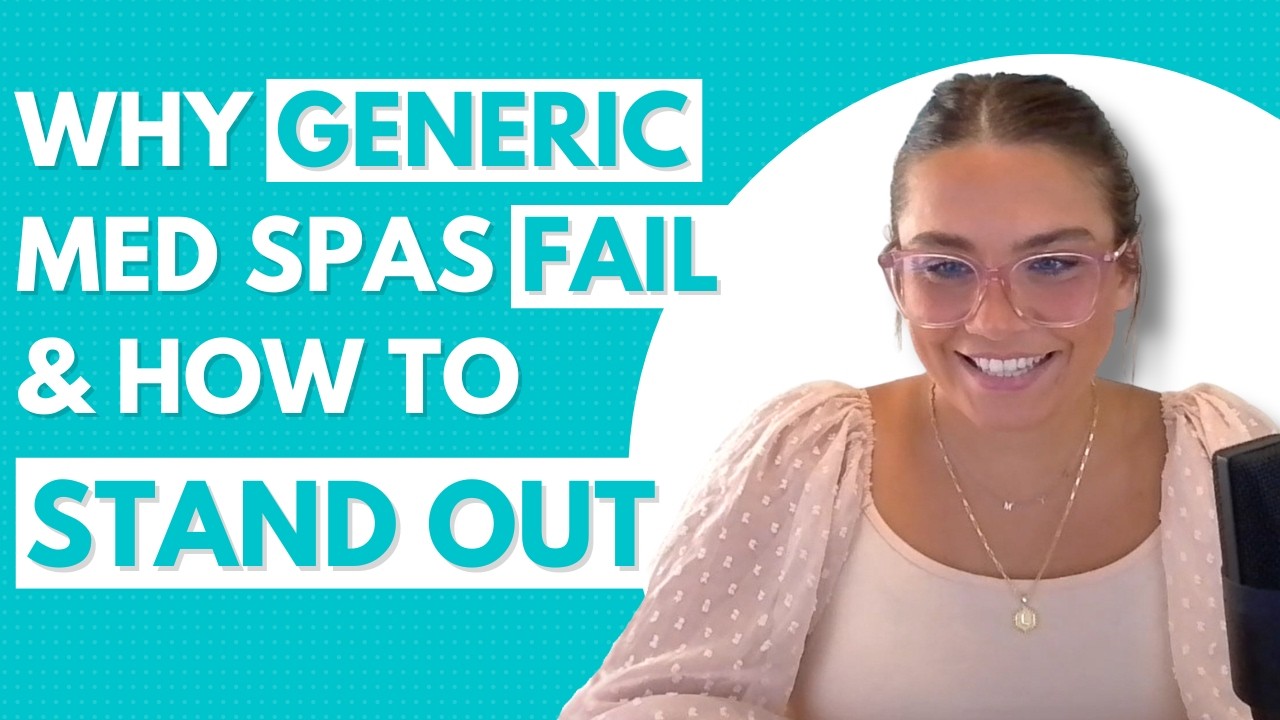
If you’re ready to implement more efficient & effective marketing strategies for your practice, book your FREE strategy session & marketing plan: https://go.medspamagicmarketing.com/schedule
INTRODUCTION: WHY DIFFERENTIATION MATTERS MORE THAN EVER
Hey everybody, Ricky here with Med Spa Magic Marketing, and I’m joined by Lauren, our lead digital marketing specialist. In this article, we’re going to walk through specific elements you can weave into your marketing that truly set your med spa apart—and make every ad, post, and promotion more effective.
These principles apply across the board:
- Facebook and Instagram ads (Meta ads)
- Google Ads and Google Organic
- Your website and landing pages
- Email and SMS campaigns
- Offline marketing and community initiatives
The goal is to help you build a marketing message that not only sounds good, but actually moves people to choose you over competitors in a meaningful way.
THE CORE QUESTION: WHAT CAN YOU SAY THAT COMPETITORS CAN’T (OR WON’T)?
This whole framework was inspired by something I heard from Alex Hormozi, one of the more prominent thought leaders in the marketing space right now. He talks a lot about differentiation, and one idea really stuck with me:
A great starting point for building a unique brand is to ask:
What can you say about your business that your competitors can’t—or won’t—say?
I’d add one more crucial layer to that:
- It has to be meaningful to your prospects.
You can point out all kinds of differences between you and your competitors, but if those differences don’t excite your ideal patient or make them feel safer, more confident, or more understood, they don’t really matter.
Another key idea from Hormozi: anyone can copy your offer.
We talk constantly about how important offer attractiveness is for marketing performance—and that’s 100% true. But:
- Competitors can match your prices.
- They can copy your promotions.
- They can create similar bundles.
So you need more than just a strong offer. You need “bells and whistles” that:
- Differentiate your brand in a real way, and
- Are difficult or impossible to copy.
In simple terms, the recipe for marketing success becomes:
- Meaningful differentiation
plus - A highly attractive, best-in-class offer
If you can consistently check both of those boxes, your marketing campaigns are going to perform better.
REPUTATION: THE FIRST PLACE TO LOOK FOR DIFFERENTIATION
When we’re building ad campaigns or messaging for clients, reputation is usually the first place we look for differentiation.
Why? Because it maps naturally to how patients already buy:
- They Google you.
- They read reviews.
- They compare you to others in town.
If you can honestly and clearly say you stand apart on reputation, that’s a powerful message to bring front and center in your marketing.
However, there’s an important nuance:
- If you have “good reviews” but so does everyone else, that doesn’t really differentiate you.
- You need something truly substantial.
For example, we have a client with over 400 perfect 5-star reviews. By all available evidence, they really are the top-rated med spa in their town. That’s not just a nice-to-have—that’s something you absolutely should be using in your ads, website copy, and social media.
Some reputation-based differentiators to consider:
- Top-Rated on Google or Other Platforms
- “Highest-rated med spa in [City] with over 400 five-star reviews.”
- Make sure this is verifiably true before you claim it.
- ‘Best Of’ Awards and Local Recognition
- “Voted Best Med Spa in [City] [Year].”
- Even if these awards are pay-to-play or easy to obtain, most consumers don’t know that.
- That “Best Of” badge with the year on it can visually separate you from other options.
- Clients often ask: “Is this worth $700 just to get the badge?”
If you can use that badge across your ads, website, and in-office materials, our answer is usually yes—because it can help you stand out in ways your competitors can’t easily replicate. - Top-Rated on Other Platforms
- Yelp, RealSelf, Facebook, etc.
- If you are truly number one or clearly ahead of the pack, call that out.
- Celebrity, Influencer, or Local VIP Clients
- At the national level, you’ll see things like Demi Lovato with a brand like Jeuveau or celebrities associated with specific products or injectables.
- At your level, look for local equivalents: media personalities, local influencers, business leaders, or well-known community members who are actual patients.
- One example from our clients:
- One practice is the exclusive med spa for a local NFL cheerleading team.
- On some of their graphics, we use actual cheerleaders as models and caption it:
- “Real [Cheer Team Name] member and [Med Spa Name] patient.”
- Those graphics consistently perform extremely well because they carry instant credibility and social proof.
- Media Features and Press
- Features in outlets like GQ, Forbes, RealSelf, local magazines, or niche sites (e.g., “Moms Who Think”).
- Even if these came through PR efforts or SEO work, they still establish authority.
- Important legal note:
- Be careful using logos (Forbes, GQ, etc.) on your website or marketing materials.
- You’re usually safe referencing the feature in text (“As featured in [Publication]”), but using logos may require explicit permission. Always double-check before using publication branding.
If you don’t yet have strong reputational differentiators, that’s not a dead-end. It’s a to-do list:
- Get more 5-star reviews.
- Go after “Best Of” awards.
- Look for influencer or community partnerships.
- Pursue media opportunities.
The key is to build proof that you’re not just “another option”—you’re the clear choice.
CREDENTIALS: POWERFUL WHEN THEY’RE TRULY UNIQUE (AND MEANINGFUL)
Next up: credentials.
Credentials can be a powerful differentiator—but only if they’re both:
- Truly unique relative to your competitors, and
- Clearly tied to a benefit the patient cares about.
A common trap:
- “We’ve been in business 20 years.”
- “We’ve treated 10,000 patients.”
Those facts can sound impressive, but if they aren’t supported by stellar reviews and real outcomes, they don’t carry much weight. They’re leading indicators, not proof.
Use credential-based differentiation when:
- You genuinely have training or experience that most competitors don’t.
- You can explain how that translates into a better or safer result.
Some examples:
- Unusual or Advanced Medical Backgrounds
- One of our clients is a former cardiothoracic surgeon.
- That story matters to patients: it signals advanced technique, intense training, and depth of medical knowledge.
- Plastic surgeons, in particular, often have an immediate advantage for similar reasons—deeper, more extensive training in anatomy and aesthetics.
- MD vs. NP/RN (When It Truly Matters)
- Having “MD” or unique fellowships can be meaningful to certain patients, especially when paired with excellent reviews and outcomes.
- The credential alone is not the story; the connection between that credential and patient results is.
- Specialized Training or Advanced Protocols
- Providers trained by world-renowned injectors or key opinion leaders.
- Providers who are trainers themselves for major brands like Galderma or Allergan.
Lauren’s point here is critical:
Don’t just say, “We’re trainers for Allergan.” Explain why that matters:
- It implies a higher bar for technique and safety.
- It suggests other providers in the area look to you as a standard.
If your providers don’t currently have standout credentials, that’s another opportunity to go get them:
- Pursue specialized training.
- Aim to become a trainer or speaker.
- Add meaningful certifications that are rare in your market.
AUTHORITY: PODCASTS, CONTENT, AND PUBLIC PRESENCE
Authority is slightly different from credentials. Instead of degrees and titles, authority is about visibility and leadership in the field.
Ask yourself:
- Do you host a podcast or YouTube channel?
- Have you been invited to speak at conferences or events?
- Have you authored a book, guide, or published paper?
- Are you a trainer or educator for major pharma or device companies?
All of these can and should be layered into your marketing, especially when they’re unique in your area:
- “Lead injector and national trainer for [Brand].”
- “Featured speaker at [Conference].”
- “Host of the [Podcast Name] podcast on aesthetics and med spa growth.”
Again, the filter is always:
What can you say that your competitors can’t or won’t say?
If you can claim something genuinely rare in your market, it belongs in your ads and on your website.
PROTOCOLS AND METHODOLOGIES: A DIFFERENT WAY OF DOING TREATMENT
This is one of the easiest, most accessible ways to differentiate—and you can build it from scratch.
We’re talking about unique protocols, frameworks, or treatment methodologies that guide the way you evaluate and treat patients.
Examples:
- Advanced Imaging or Diagnostics
- Skin imaging systems that reveal underlying skin age or damage.
- Ultrasound or similar devices used to visualize product placement and anatomy in real time.
If you use these tools, don’t just list the devices. Explain why they matter:
- “We analyze underlying skin health and age so we can recommend the right treatment, not just the one you thought you wanted.”
- “Our ultrasound-guided injections help improve precision and safety.”
- Structured Treatment Frameworks
One of our favorite examples comes from a client who uses a matrix during consultations that always touches:- Injectables
- Laser/Device treatments
- Skincare
- (And a fourth category unique to their practice)
- The point isn’t the matrix itself—it’s that:
- Every consult follows a consistent, holistic framework.
- Patients get a well-rounded, multi-modality plan, not just a single quick fix.
That’s something your competitors probably don’t talk about—and probably can’t claim if they don’t have a structured process.
A word of caution:
Don’t just throw services together and give them a fancy name.
- If you have a “signature glow package” that’s just Botox plus filler with a cute label, but no real thought or innovation behind it, patients eventually see through that.
Instead:
- Build combinations and protocols that truly are unique to your providers’ philosophies and skills.
- Explain exactly how and why those combinations enhance safety, results, or long-term outcomes.
You get to invent this part of your differentiation—so there’s no excuse not to have something meaningful here.
RESULTS AND OUTCOMES: WHAT PATIENTS CARE ABOUT MOST
At the end of the day, most patients care about results:
- “Will this work?”
- “Will it be safe?”
- “Will it be worth the money?”
Anything you can say that directly addresses these questions in a way your competitors can’t is pure gold.
Ideas to leverage:
- High Satisfaction Ratings for Devices and Treatments
- If you use devices or treatments with strong satisfaction ratings on RealSelf or similar platforms, call that out.
- This helps reduce the fear of “Does this expensive treatment actually work?”
- Satisfaction Guarantees or Adjustment Policies
- If you’re willing to offer things like a results review or adjustment policy, that reduces perceived risk.
- Any mechanism that says: “We stand behind our work and will make it right” can be a differentiator—especially when others don’t make such commitments.
- Time to Results
- If you can legitimately offer a treatment or protocol that delivers visible changes after one appointment, that’s compelling.
- “See a real difference before you walk out of the office” is a powerful message when it’s true.
- Proprietary Combinations That Actually Improve Outcomes
- Not just cute bundles—but carefully designed combinations that enhance results, reduce downtime, or improve comfort.
- If you’ve built something like this, explain how it works and what patients can expect.
And don’t forget about reviews as outcome proof:
- Feature your best reviews prominently—especially those from influencers, local VIPs, or highly relatable patients.
- Use them in ads, on your website, and in email/SMS.
Again, use the differentiation filter:
- Everyone has some reviews.
- What reviews, testimonials, or proof do you have that your competitors don’t have?
PATIENT EXPERIENCE: MAKING IT EASIER (AND MORE ENJOYABLE) TO CHOOSE YOU
Another major arena for differentiation is patient experience. Ask:
How can we make it easier, more convenient, or more enjoyable to be our patient than anyone else’s?
Possibilities include:
- Same-Day Consults or Treatments
- “Same-day consults available”
- “Consult and treatment in one visit for qualified patients”
- Virtual Consults
- Great for busy professionals, parents, or out-of-town patients.
- Can be marketed as a convenience and accessibility advantage.
- Luxury or Concierge Touches
- Think beyond just pretty décor.
- Small touches—comfort menus, relaxing amenities, or elevated hospitality—can create a memorable experience.
- Just be sure to check legal and compliance rules for anything like alcohol in-office (e.g., champagne).
- Private or VIP Entrances and Rooms
- Particularly meaningful for higher-profile clients or anyone who values discretion.
- If this is unique in your area, make sure you highlight it.
- Evening, Early Morning, or Weekend Hours
- So many patients struggle to schedule around work and family.
- Offering Saturday appointments, late evenings, or even early mornings can differentiate you from competitors who only operate standard 9–5 hours.
- Child-Friendly Options
- Consider ways to make appointments easier for parents.
- We often cite a parallel example from Burn Boot Camp, where child watch is a major differentiator.
- A full childcare setup may not be practical for a med spa, but even small steps toward making visits more parent-friendly can be a huge advantage.
- Thoughtful Add-Ons
- A free dermaplane at the start of a facial.
- A small, curated skincare sample given at checkout.
These seemingly minor things can be the difference between:
- “That was fine.”
- And: “I love that place and I’m never going anywhere else.”
Just remember: if you promote a free add-on like dermaplaning, explain what it is and why it matters:
- “A quick, painless treatment that removes peach fuzz and dead skin so your results are even smoother and your products absorb better.”
OPERATIONAL EXCELLENCE: ZERO WAIT TIMES AND TRUE CONVENIENCE
Operational details can also become marketing differentiators.
For example:
- Zero Wait Time Policy
- One of our podcast guests shared that seeing someone in their waiting room gave them anxiety.
- Their goal was a true zero-wait experience—patients come in and go straight to the treatment room.
If you can genuinely maintain something like:
- “No waiting—your appointment starts on time, every time.”
that’s a powerful differentiator in a world where people expect delays at medical offices.
Convenience—both in location and experience—is a core part of the purchasing decision. Don’t underestimate it, and don’t be afraid to put operational excellence into your marketing message if you can back it up.
VALUES, IDENTITY, AND ALIGNMENT (HANDLE WITH CARE)
This is a more nuanced area, but it matters:
People like to do business with people they feel they have something in common with.
That “something” can be:
- Lifestyle
- Values
- Family situation
- Faith
- Cultural or ethnic background
- Gender
This doesn’t mean you need to make your marketing polarizing or political. But you can:
- Share parts of your story or identity that matter to you.
- Support charities that authentically align with your values.
- Reflect your community’s diversity in your visuals and messaging.
Some examples:
- Story and Lifestyle Alignment
- A single mom who openly shares the reality of juggling kids and a business may naturally attract a similar audience.
- Patients may feel, “She gets me.”
- Charitable Partnerships
- Donating a percentage of profits to a cause your patients care about.
- Supporting local animal rescues, women’s shelters, or health-related charities.
- When authentic, this can create a powerful emotional connection.
- Faith-Based Integration
- For some practices, faith is central to how they treat people and run their business.
- Thoughtfully and respectfully incorporating this can attract patients who share those values.
- Cultural or Minority Representation
- Patients with specific skin types or cultural backgrounds may feel more comfortable with providers who share their lived experience.
- If your providers reflect a specific community (e.g., a high Asian population in the Pacific Northwest), representing that in your marketing can be a differentiator.
- Gender-Specific Messaging
- Most med spas have a heavily female client base (often 85–95% women).
- But you may want to carve out a space for male clients as well.
Lauren shared a great example:
- A client posted a video of her performing microneedling and hair restoration on her husband.
- After posting, they received several DMs and calls from men who said:
- “I didn’t know you worked on men. I’d love to come in and try that.”
Important warning:
- When you build campaigns specifically targeting men for services like Botox via paid ads, you often see:
- Higher customer acquisition costs
- Lower response rates
- The demand among men is still smaller overall, so results tend to be less efficient than female-focused campaigns.
That said:
- Using male representation in organic social media or sprinkling male-focused content within your usual mix can be a smart way to grow that segment without overcommitting ad spend.
A helpful rule of thumb:
- Reflect your actual market in your marketing materials.
- If 90% of your patients are women and 10% are men, let your imagery follow roughly that ratio: about 9 out of 10 photos featuring women, with men periodically represented.
- The same applies for cultural/ethnic representation.
- If your patient base has a large Asian population, show that more often than you would in a market where that’s not the case.
EXCLUSIVITY AND BREADTH OF SERVICES: WHEN BEING “THE ONLY ONE” MATTERS
Another dimension of differentiation is exclusivity:
- Do you offer something no one else in your area has?
- Are you so in-demand that you genuinely have a wait list?
- Are you a true “one-stop shop” for aesthetic and wellness needs?
Some angles to consider:
- Exclusive Devices or Treatments
- We have a client in central Massachusetts who has a laser device (Neogen) that, at the time, no one else in their market had.
- Initially, we were skeptical:
- “No one knows what this is. Will it work?”
- But being the only provider in town with that technology became a major differentiator.
- There’s no like-for-like comparison—no other practice can say, “We do exactly that.”
- Waitlist and Limited Availability
- If you’re genuinely operating on a waitlist and turning people away due to demand, that inherently signals desirability and trust.
- When it’s authentic, exclusivity like this can be compelling:
- “Due to high demand, we are accepting a limited number of new patients each month.”
- “Due to high demand, we are accepting a limited number of new patients each month.”
- One-Stop Shop for Aesthetics and Wellness
- Offering injectables, laser and device treatments, skincare, hormone replacement therapy, medical weight loss, and functional medicine under one roof can be very attractive.
- Patients don’t have to bounce between different providers for different needs.
However, a big disclaimer here:
- If you’re currently a “Botox and filler only” practice, don’t run out tomorrow and add 15 new services just because being a one-stop shop sounds appealing.
- Adding too many services too fast can stress your finances, training, staffing, and patient experience.
Instead:
- If you already offer broad services and do them well, that can be part of your differentiation.
- If not, grow your service mix strategically and thoughtfully over time.
PUTTING IT ALL TOGETHER: HOW TO APPLY THIS IN YOUR MARKETING
Let’s bring this full circle.
Your job as a med spa owner or leader is to figure out:
What can we say, honestly and confidently, that our competitors can’t or won’t say—
that is also meaningful to our ideal patients?
Then:
- Combine that differentiation with a strong, attractive offer.
- Compelling pricing or bonuses for the right services.
- Clear, simple, and easy to respond to.
- Embed that combination into all of your marketing materials:
- Remember the real goal: “butts in seats” for the right services.
- Action changes attitude faster than attitude changes action.
- To become someone’s favorite med spa, you first have to get them in the door and provide an amazing experience.
Once they experience your differentiated care, service, and results, perception follows experience.
A QUICK FAVOR: HELP US REACH MORE MED SPAS
If you’ve found this kind of content helpful, I’d love your help reaching more people.
- If you listen to the Med Spa Success Strategies podcast, it would mean a lot if you’d leave a review on iTunes or Spotify.
- If you watch our content on YouTube, make sure you hit Subscribe so you don’t miss future episodes.
Those small actions help the algorithm show our content to more med spa owners and teams who need it.
HOW TO WORK WITH US
If you’re a med spa owner or aesthetic practice leader and you want help with:
- Digital marketing strategy
- Facebook, Instagram, and Google Ads
- Lead generation, offer design, and tracking
- Implementation and execution of everything we’ve talked about
You can visit:
medspamagicmarketing.com
We offer a free 90-minute strategy session for practices that:
- Are doing at least $50,000/month in revenue, and
- Can comfortably invest in professional marketing support.
You’ll walk away with clarity, a concrete plan, and a better understanding of what it will take to scale your growth.
Thanks for reading, and we’ll see you in the next piece.